

YouTube is still one of the best places to get real traffic and make money. YouTube is where people visit in order to learn something new, have fun, and find solutions for their problems. When you start creating valuable content for them, you will receive traffic from YouTube for years.
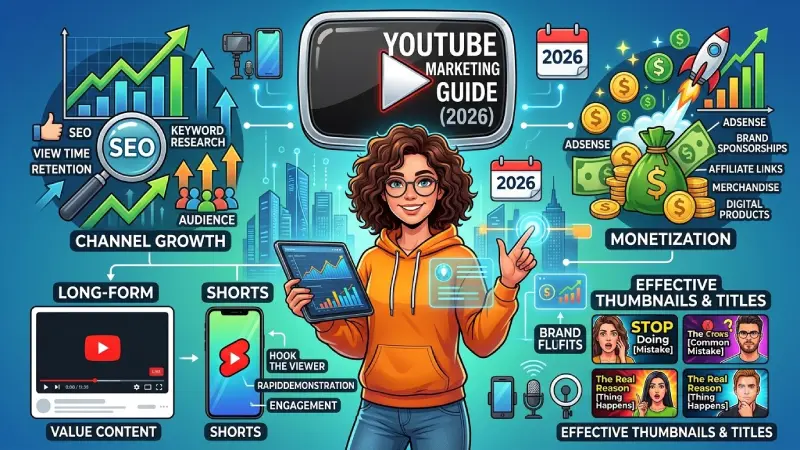
Most channels fail because they perceive YouTube to be similar to social media. They post content erratically, have bad titles and thumbnails, do not pay enough attention to Shorts, or expect the monetization process to happen immediately. Successful channels view YouTube as a library and a business.
In this guide, we cover the practical aspects of YouTube marketing in 2026: how to be found via searches and suggestions, how to create effective thumbnails and titles, how to utilize Shorts efficiently, what advertising on YouTube involves, and how channels actually generate revenue.
For the overarching strategy, read our complete guide on Social Media.
YouTube SEO Essentials
YouTube is the second largest search engine in the world. Having your videos surface in the search results and suggested videos is one of the highest leverage actions that you could take. Understand how how YouTube search and discovery work .
What actually influences ranking
Two signals sit at the top:
- Click-through rate (frequency of clicks made by users watching your video)
- View time and viewer retention (length of view time and proportion of the video that is watched)
If people click and then leave quickly, the video usually stops getting pushed. If they click and stay, YouTube shows it to more people.
Other important factors include:
- To what degree the title, description, and contents of the video connect with the interest of the searchers.
- Engagement (likes, comments, shares, and views of other videos).
- Overall channel performance and session duration.
Practical SEO steps that still work
- Research real search demand. Look at what people actually type into YouTube search. Using tools is effective, but just typing in your topic and taking note of the suggested topics is equally effective.
- Put the main keyword near the beginning of the title when it fits naturally. Write the title for humans first — it has to make someone want to click.
- Describe your video well. Your main points in the video should be included in the first two or three lines. If the video is long, include timestamps.
- Speak your main topics clearly in the video. YouTube transcribes audio, so the words you say matter.
- Tags are less important than they used to be. A few relevant ones are fine, but stuffing them does almost nothing..
YouTube Thumbnails and Titles
Your thumbnail and title are the ad for your video. If they don’t earn the click, nothing else matters.
What makes a strong title
- Clear benefit or curiosity
- Easy to understand at a glance
- Includes the main topic or keyword naturally
- Feels specific rather than vague
Examples of patterns that often work:
- How to [result] without [common problem]
- The real reason [thing happens]
- I tested [popular method] for 30 days
- Stop doing [common mistake]
What makes a strong thumbnail
- One clear focal point (usually a face or the main subject)
- High contrast so it stands out in a feed
- Minimal text (three to five words maximum)
- Emotion or curiosity when it fits the topic
- Consistent style so your channel becomes recognizable
Test different styles. Many successful channels treat thumbnails as an ongoing experiment. Small changes in expression, text, or background can move click-through rate significantly.
Remember: a high click-through rate only helps if people stay and watch. The goal is the combination of clicks and retention.
YouTube Shorts Strategy
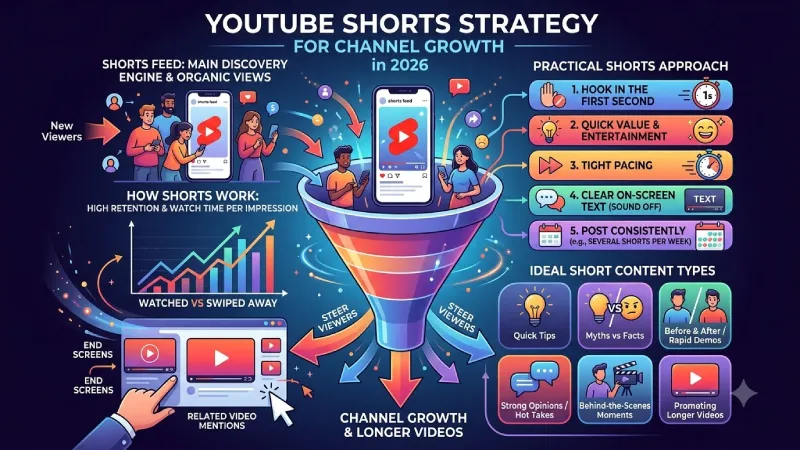
Shorts are one of the main ways new viewers discover channels in 2026. A large share of organic views on the platform now come from the Shorts feed.
How Shorts work differently
Shorts are judged heavily on whether people watch them or swipe away. Retention and watch time per impression matter a lot. A Short that keeps people watching has a much better chance of being shown more widely.
Practical Shorts approach
- Hook in the first second. There is almost no time for a slow intro.
- Deliver value or entertainment quickly.
- Keep the pacing tight.
- Use clear on-screen text for people watching without sound.
- Post consistently. Many channels see better results with several Shorts per week.
Shorts work especially well for:
- Quick tips
- Myths vs facts
- Before-and-after or rapid demonstrations
- Strong opinions or hot takes
- Behind-the-scenes moments
- Promoting longer videos
Attract more viewers using Shorts and then steer those that you retain into watching your other videos. A straightforward way to do this would be to make use of an end screen or to talk about a related video in your Shorts.
YouTube Ads Campaign Types
YouTube Ads, which utilizes the Google Ads platform, enables you to target your desired audience through video advertising.
Common formats
- Skippable in-stream ads (play before, during, or after other videos)
- Non-skippable in-stream ads
- Bumper ads (very short non-skippable)
- In-feed / discovery ads
- Shorts ads (vertical, native to the Shorts feed)
- Demand Gen campaigns that include YouTube placements
Practical tips for 2026
- Format your copy according to the aim. Formats used in awareness programs are usually different from those used in direct response.
- Creativity still trumps all. The initial one to two seconds determine whether the viewer will skip. Video content that feels like native content tends to beat traditional TV ads.
- Targeting works well since it is linked to the Google search and audience information. Intent audiences based on actual search queries work very well towards high-intent objectives.
- Define your conversion or view objective, budget your campaign appropriately, and create multiple creatives..
- Ads work best when you already have organic videos that perform well. You can also use ads to accelerate growth of strong organic content.
Monetizing a YouTube Channel
There are multiple ways to make money from a YouTube channel. Ad revenue is only one of them.
YouTube Partner Program (AdSense)
To unlock full ad revenue sharing you generally need:
- 1,000 subscribers
- And either 4,000 verified public watch hours over the last 12 months or 10 million verified Shorts views over the last 90 days
(Note: thresholds for new applicants are scheduled to increase in 2027.)
Once you have approval, you will receive a certain percentage of ad revenue from your videos. The RPM (revenue per thousand impressions) is based on the niche, location of the audience, and season.
Other revenue streams that often matter more
- Brand sponsorships and integrations
- Affiliate links
- Your own digital products or courses
- Channel memberships and Super Thanks
- Physical products or merch
- Services or consulting
- Email list and off-platform offers
Most monetization channels that earn well utilize some combination of the above. Pure ad revenue is rarely sufficient for earning a full-time income unless the channel itself is large or in a high RPM niche.
Practical monetization path
- Focus first on consistent uploads and audience growth.
- Join the Partner Program when you qualify.
- Add simple affiliate or product links once you have some traffic.
- Create a mailing list and/or community so you aren’t reliant on the algorithm entirely.
- Once you find your niche and target market, consider sponsorships.
Diversification saves you from algorithm changes and price fluctuations of ads.
Putting It All Together
This is how an efficient YouTube platform will appear in 2026:
- Research topics people actually search for
- Package videos with strong titles and thumbnails
- Deliver clear value so people stay and watch
- Use Shorts regularly for discovery
- Post long-form content on a sustainable schedule
- Review analytics to improve retention and click-through rate
- Turn attention into email subscribers, customers, or multiple income streams
Perfection in production is not required. Good concepts, good packaging, and consistency work better than fancy production equipment most of the time.
Make your first video about solving a problem for the viewer you are targeting. Package it nicely. Release it. Analyze the statistics. Repeat. Year after year the channel builds upon itself.
YouTube loves those who add value to their viewers. That is all you should worry about, and success will follow.
Frequently Asked Questions
You tube shorts strategy ?
It depends on various factors. Some of the channels get success within a few months with regular uploads and proper branding while some of them take years. Regularity and progress matter more than just one video.
Youtube shorts strategy
Yes for most channels. Shorts are one of the main discovery tools right now. They can bring new viewers who then watch your longer videos.
What is more important — SEO or thumbnails/titles?
Both. SEO helps the right people find the video. Thumbnails and titles decide whether they click. Retention decides whether YouTube keeps promoting it.
Do I need expensive equipment to start?
Not really. There have been plenty of successful channels that began with just a telephone and some lighting. Audio and proper lighting are more important than a good camera when starting out.
How do most channels earn their money?
A mix of ad revenue, sponsorships, affiliates, and their own products or services. Relying only on AdSense is risky. Building multiple income streams is the more stable path.
Conclusion
This is the master version of Cluster 6 (Marketing on YouTube). It follows the straightforward practical style as the earlier guides, in the cluster. Please let me know if any sections need explanation or changes.
To take the next step, see our detailed guide on YouTube Marketing.