

Introduction
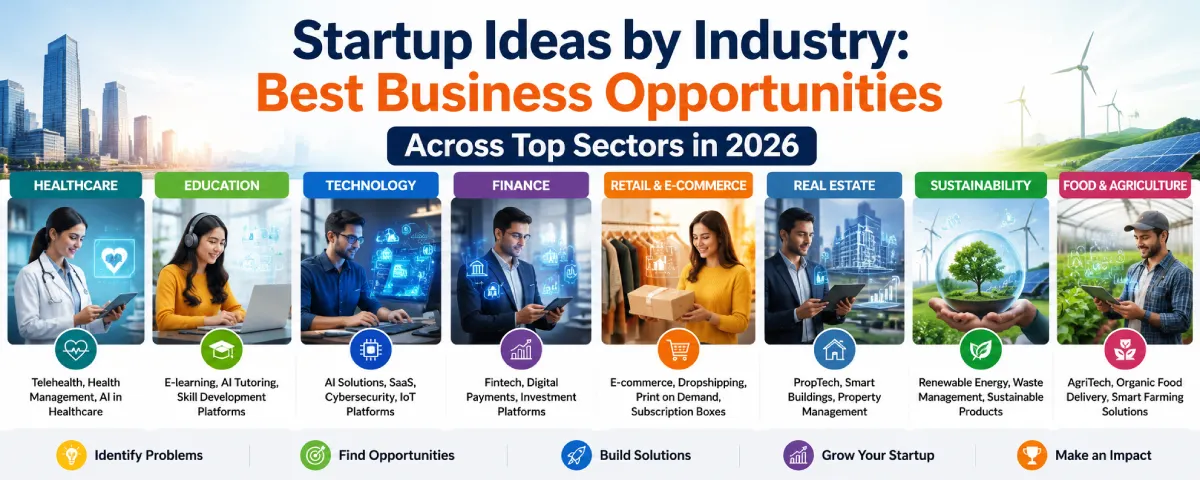
Selection of the proper industry is extremely important for starting up a new venture. There will be differences in the customer base, the competitive situation, conditions in the markets and potential for growth within various sectors. By the year 2026, there are many options available to the entrepreneur in terms of choosing the industry to start their venture within, which includes healthcare, education, sustainability, real estate, IT, financial sector, retail industry and many more.
For the overarching strategy, read our complete guide on Startups.
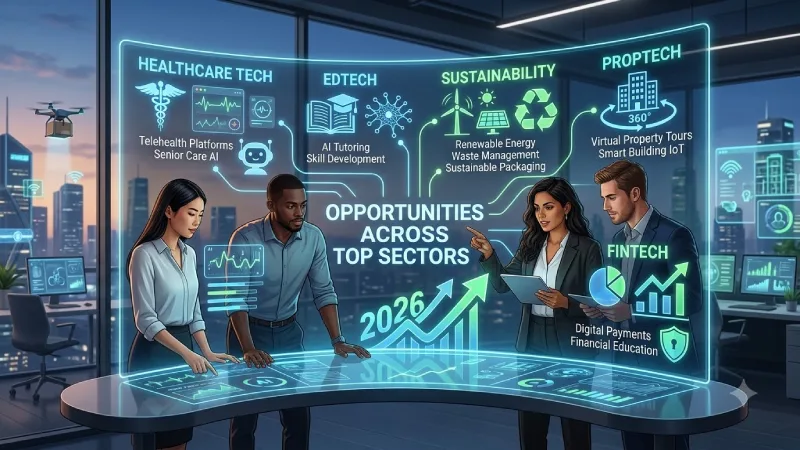
Best startup ideas in various sectors include solutions for an existing problem or improving something that is not working as good as it should be or offering services in a more cost-effective way. It is not necessary that entrepreneurs must discover something new or invent a completely new market in order to succeed in a particular sector.
This article will cover the best startup ideas within various industrial sectors and how to analyze them.
Healthcare Startup Ideas and Opportunities
The healthcare industry is among the biggest industries globally, hence giving rise to opportunities for entrepreneurs capable of making improvements. Technology has also been transforming the way health care providers offer their services and management of information.
- Telehealth Platform
Develop a digital platform to connect patients with healthcare professionals virtually.
Possible features include:
- Video consultations
- Appointment scheduling
- Secure messaging
- Digital prescriptions
- Patient follow-ups
Startups can focus on specific areas such as mental wellness, specialist consultations, or rural healthcare access.
- Healthcare Management Software
Develop software that helps clinics and healthcare providers manage daily operations.
Potential features include:
- Patient scheduling
- Digital records
- Billing management
- Staff scheduling
- Automated reminders
A specialized platform designed for smaller clinics may provide a more focused solution than general healthcare software.
- Senior Care Technology
As populations age, technology can help families and caregivers manage senior care.
Startup opportunities include:
- Remote monitoring
- Medication reminders
- Emergency alert systems
- Caregiver coordination
- Senior wellness platforms
- Health and Wellness Apps
Build digital platforms that support healthy lifestyles.
Examples include:
- Fitness tracking
- Nutrition planning
- Sleep monitoring
- Meditation
- Wellness coaching
- Medical Supply Delivery
Create a convenient delivery service for approved medical supplies and healthcare products.
The business could focus on serving:
- Elderly customers
- Patients with chronic conditions
- Healthcare facilities
- Home-care providers
- Healthcare AI Solutions
AI can help healthcare organizations with administrative and analytical tasks.
Potential applications include:
- Appointment automation
- Medical documentation assistance
- Data analysis
- Patient communication
- Workflow optimization
Health care startups must pay attention to privacy, security and the laws that apply to them. It is important to be careful, with privacy because patients trust the startups with their information.
Education Startup Ideas for 2026
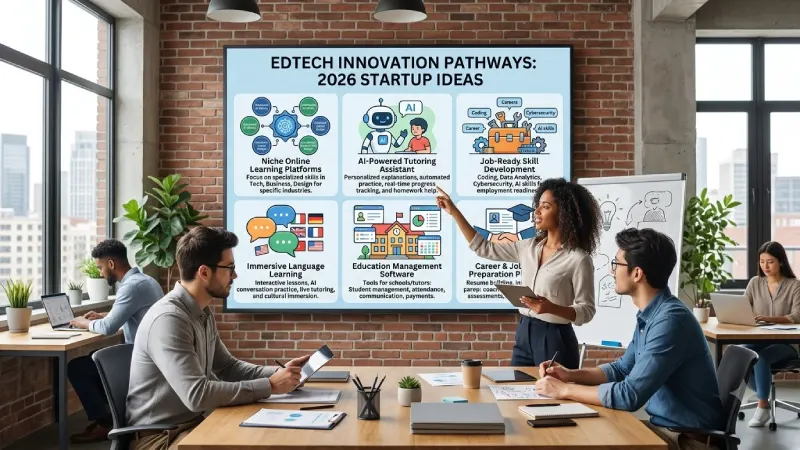
E-Learning is still growing through the use of Artificial Intelligence and personalization of educational experiences.
- Online Learning Platform
Create a platform offering courses in areas such as:
- Technology
- Business
- Marketing
- Design
- Professional skills
Niche learning platform does not have to compete with larger education platforms but can focus on a particular market segment.
- AI-Powered Tutoring
Design an AI learning assistant that offers customized explanations and practice problems.
Features could include:
- Personalized lessons
- Automated quizzes
- Progress tracking
- Homework assistance
- Adaptive learning
- Skill Development Platform
Build a platform that helps users develop job-ready skills.
Potential categories include:
- Coding
- Data analytics
- Digital marketing
- Cybersecurity
- AI skills
- Language Learning Business
Create an online platform that helps users learn languages through:
- Interactive lessons
- AI conversation practice
- Live tutoring
- Personalized learning plans
- Education Management Software
Develop tools for schools, tutors, and training organizations.
Features may include:
- Student management
- Attendance tracking
- Parent communication
- Online payments
- Course scheduling
- Career and Job Preparation Platform
Help students and professionals prepare for employment through:
- Resume tools
- Interview preparation
- Career coaching
- Skill assessments
- Job search resources
Sustainability and Green Startup Ideas
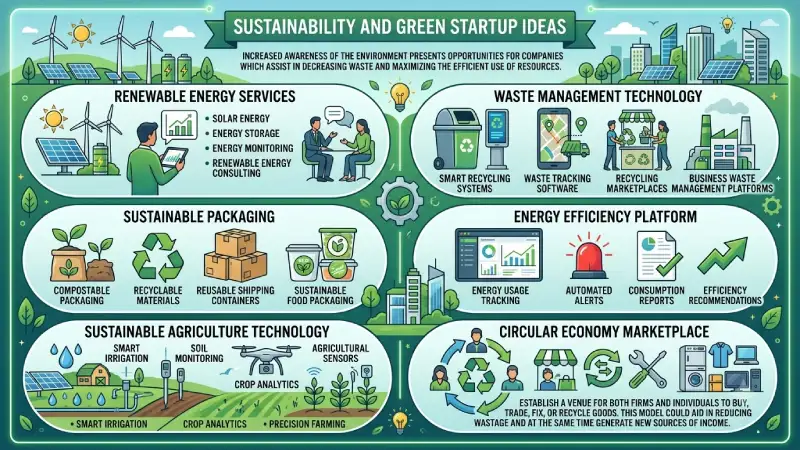
Increased awareness of the environment presents opportunities for companies which assist in decreasing waste and maximizing the efficient use of resources.
- Renewable Energy Services
Entrepreneurs can explore businesses related to:
- Solar energy
- Energy storage
- Energy monitoring
- Renewable energy consulting
- Waste Management Technology
Create solutions that improve how waste is collected, sorted, recycled, or reused.
Potential ideas include:
- Smart recycling systems
- Waste tracking software
- Recycling marketplaces
- Business waste management platforms
- Sustainable Packaging
Develop environmentally friendly alternatives to traditional packaging.
Products could include:
- Compostable packaging
- Recyclable materials
- Reusable shipping containers
- Sustainable food packaging
- Energy Efficiency Platform
Design programs to aid companies and landowners to track and decrease energy usage.
Features could include:
- Energy usage tracking
- Automated alerts
- Consumption reports
- Efficiency recommendations
- Sustainable Agriculture Technology
Technology can help farmers improve productivity while using fewer resources.
Startup opportunities include:
- Smart irrigation
- Soil monitoring
- Crop analytics
- Agricultural sensors
- Precision farming
- Circular Economy Marketplace
Establish a venue for both firms and individuals to buy, trade, fix, or recycle goods.
This model could aid in reducing wastage and at the same time generate new sources of income.
Real Estate and PropTech Startup Ideas
The way property is bought, sold, leased, managed, and maintained is being revolutionized by technology, which opens up a new market for startups in PropTech.
-
Property Management Software
Create software that helps property owners manage:
- Rent collection
- Tenant communication
- Maintenance requests
- Property records
- Lease management
-
Virtual Property Tours
Develop technology that allows potential buyers or renters to explore properties remotely.
Solutions can include:
- 360-degree virtual tours
- Interactive floor plans
- Virtual staging
- 3D property visualization
-
Real Estate Marketplace
Build a specialized marketplace for specific property categories.
Examples include:
- Commercial properties
- Student housing
- Vacation rentals
- Co-living spaces
- Industrial properties
-
Smart Building Technology
Develop IoT solutions that help property owners monitor and manage buildings.
Applications include:
- Energy monitoring
- Smart security
- Occupancy tracking
- Automated lighting
- Predictive maintenance
-
Real Estate Data Analytics
Create platforms that provide useful property insights.
Potential data points include:
- Property prices
- Rental demand
- Neighborhood trends
- Investment opportunities
- Market forecasts
-
Property Maintenance Platform
Connect property owners with trusted maintenance professionals.
Services could include:
- Plumbing
- Electrical work
- Cleaning
- Repairs
- Landscaping
Other Promising Startup Industries in 2026
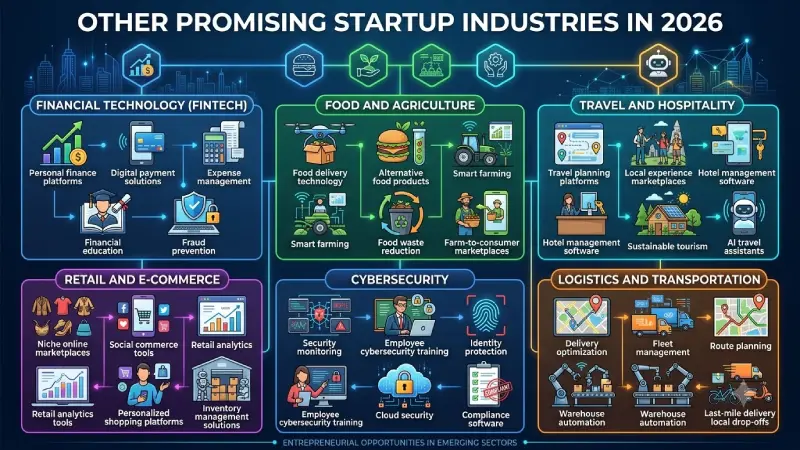
There are various industries including healthcare, education, sustainability, and real estate that provide business ventures.
Financial Technology
Potential ideas include:
- Personal finance platforms
- Digital payment solutions
- Expense management
- Financial education
- Fraud prevention
Food and Agriculture
Opportunities include:
- Food delivery technology
- Alternative food products
- Smart farming
- Food waste reduction
- Farm-to-consumer marketplaces
Travel and Hospitality
Entrepreneurs can explore:
- Travel planning platforms
- Local experience marketplaces
- Hotel management software
- Sustainable tourism
- AI travel assistants
Retail and E-commerce
Potential businesses include:
- Niche online marketplaces
- Social commerce tools
- Retail analytics
- Personalized shopping platforms
- Inventory management solutions
Cybersecurity
Businesses increasingly need protection against digital threats.
Startup opportunities include:
- Security monitoring
- Employee cybersecurity training
- Identity protection
- Cloud security
- Compliance software
Logistics and Transportation
Opportunities include:
- Delivery optimization
- Fleet management
- Route planning
- Warehouse automation
- Last-mile delivery solutions
How to Choose the Right Industry for Your Startup
Selecting an industry should be more than following whatever is hot at the moment. The ideal market for your business venture should correspond to your strengths, abilities, interests, and capability of solving a customer’s need.
- Consider Your Skills and Experience
Your existing knowledge can give you an advantage.
Ask yourself:
- What industries do I understand?
- What professional experience do I have?
- What problems have I personally experienced?
- What skills can I use immediately?
- Research Market Demand
Look for industries where customers have clear and recurring problems.
Research:
- Customer complaints
- Search trends
- Industry reports
- Competitor offerings
- Existing spending
- Analyze Competition
Being competitive isn’t necessarily always a negative factor. Competition could be an indication of high demand from the customers.
Study:
- Competitor pricing
- Product features
- Customer reviews
- Market positioning
- Unmet needs
- Evaluate Startup Costs
Some industries require more capital than others.
For example:
- SaaS may require software development.
- Healthcare may require compliance and specialized expertise.
- Manufacturing may require equipment.
- Retail may require inventory.
Choose an industry that fits your available resources.
- Consider Regulations
There are also industry-specific laws and guidelines for the healthcare, financial, and education industries.
Consider the following before putting your money into a venture.
- Look for Long-Term Potential
Choose an industry that can support sustainable growth.
Consider:
- Future demand
- Technology changes
- Customer behavior
- Market size
- Scalability
Industry Selection Checklist
| Factor | Question to Ask |
| Skills | Do I understand this industry? |
| Demand | Is there a real customer problem? |
| Competition | Can I offer something different? |
| Investment | Can I afford to enter this market? |
| Regulation | Are there legal requirements? |
| Scalability | Can the business grow over time? |
| Future Potential | Will demand remain strong? |
How to Validate a Startup Idea in the Selected Industry
After having chosen an industry, you should check whether your start-up idea is viable enough to put any effort into it.
Step 1: Talk to Potential Customers
Identify the individuals that face the same problems as you do.
Step 2: Investigate the Current Solutions
Identify how the customers currently handle their problems and find out flaws in the current solutions.
Step 3: Build a Simple MVP
Build a minimum viable product and test it out on a limited number of people.
Step 4: Check Customer Willingness to Pay
Customer interest is good, but willing customers can prove it better.
Step 5: Measure Results
Track:
- Sign-ups
- Sales
- Customer retention
- Feedback
- Conversion rates
Use the results to improve your idea before scaling.
FAQs
What are the best startup industries in 2026?
Prospective industries include artificial intelligence and technology, healthcare, education, sustainability, fintech, cybersecurity, real estate technology, logistics, and e-commerce.
Which industry is best for a first-time founder?
The best industry depends on your skills, budget, and experience. Service businesses and software startups can be accessible for some founders, while highly regulated industries may require specialized knowledge and additional resources.
Is healthcare a good industry for startups?
The healthcare sector can provide substantial potential due to its constant need for increased efficiency and better experiences of patients. Nonetheless, entrepreneurs should know about regulatory issues and other requirements.
What is a PropTech startup?
PropTech refers to technology businesses that improve real estate processes. Examples include property management software, virtual tours, smart building technology, real estate marketplaces, and property analytics.
Conclusion
The search for startup ideas within an industry enables the entrepreneurs to generate ideas that align with their abilities, interests, and objectives. There are many industries that present great problems for startups to tackle, such as healthcare, education, sustainability, real estate, fintech, and cybersecurity among others.
It does not have to be a highly-popular or large industry – all you need is a particular customer issue, unserved market segment, or outdated process that needs an upgrade. Market research, competitive landscape analysis, and cost and regulatory considerations should be taken into account.
Identifying an interesting industry is only the first step in launching a new venture – it should be validated with actual customers and implemented in a scalable way. It is possible to create a sustainable startup in 2026 using the industry knowledge, customer research, and business approach.
To take the next step, see our detailed guide on startup ideas for beginners.