

Retargeting and Remarketing: How to Win Back Lost Visitors (2026)
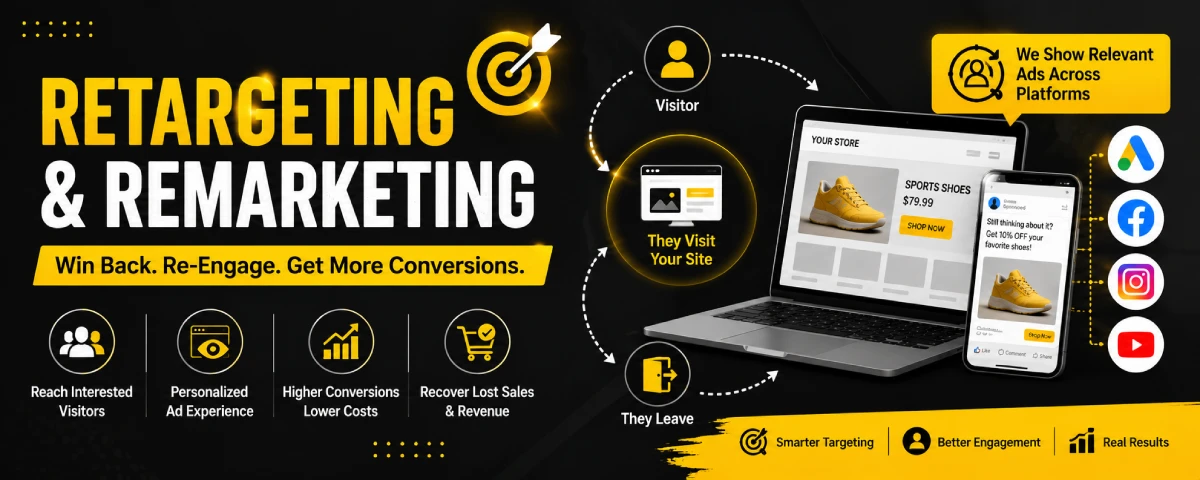
For most of the people who visit your site, there is no buying at all or even registration in your service. This is quite normal. With retargeting, also known as remarketing, you can reach out to them through very targeted advertisements when they are still interested in your products.
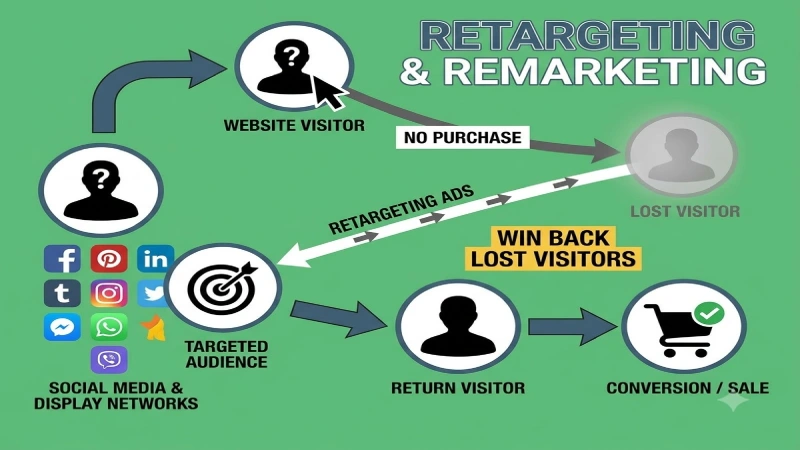
If you execute this technique properly, retargeting becomes the most converting form of paid traffic. If not, retargeting will simply irritate visitors and will be a poor use of your budget. This guide covers all aspects of retargeting and remarketing, from the difference between these two techniques to how to implement proper audience targeting and dynamic advertising, and retargeting on different channels and frequency capping.
For the overarching strategy, read our complete guide on PPC Advertising
Retargeting vs Remarketing
The two concepts can be interchanged most times, though there exists a slight distinction between them.
Remarketing
This phrase is more often linked with Google. This involves the placement of advertisements to those who have visited your website/application before, and is normally done through the use of Google Ads (search, display, YouTube, etc.).
Retargeting
The idea is employed in a wider scope and is well loved by platforms such as Meta (Facebook/Instagram), LinkedIn, TikTok, and so on. This is the idea of sending advertisements to users who have exhibited some kind of prior behavior (site visits, watching videos, shopping cart actions, etc.).
In reality, most marketers tend to use both terms to refer to one and the same meaning: advertisement to existing customers or potential customers aware of you.
Why retargeting works so well
- These people already visited your site or engaged with your content.
- They are warmer than cold audiences.
- Conversion rates are usually much higher than prospecting campaigns.
- Cost per result is often lower.
Retargeting should not be seen as a substitute for customer acquisition. It functions more effectively when there are customer acquisition campaigns running simultaneously.
Setting up Remarketing Lists
The quality of your results depends heavily on the audiences you create.
Common remarketing / retargeting audiences
| Audience Type | How It Is Built | Best Used For |
| All website visitors | Anyone who visited your site | Broad retargeting |
| High-intent visitors | Pricing page, product pages, or key pages | Stronger conversion focus |
| Cart abandoners | Added to cart but did not purchase | Recover lost sales |
| Past purchasers | People who already bought | Upsell, cross-sell, loyalty |
| Video viewers | Watched a certain percentage of your video | Warm engagement audiences |
| Lead form openers or engagers | Interacted with lead forms or content | Lead nurturing |
| Customer list | Uploaded emails or phone numbers | Targeting existing customers |
How to set up lists
On Google Ads
- Google Analytics (or Google Analytics 4) tags will help you gather your audience information.
- Create your audience via the Audience Manager.
- Length of set membership (duration one is on your list). Memberships are for 30, 60, 90, or 180 days.
On Meta (Facebook/Instagram)
- Apply the Meta Pixel and the Conversions API.
- Form Custom Audiences according to website visits, video viewing, engagement on Instagram or customer lists.
- Lookalike Audiences can be created from your best remarketing lists after.
Best practices when building lists
- Create separate lists for different levels of intent.
- Do not include converters in prospecting ads to avoid continuing to pay for people who have already converted.
- Refresh customer lists regularly.
- Respect privacy rules and platform policies when uploading customer data.
Strong lists are the foundation of good retargeting. Weak or general lists result in unnecessary expenditure.
Dynamic Retargeting Ads
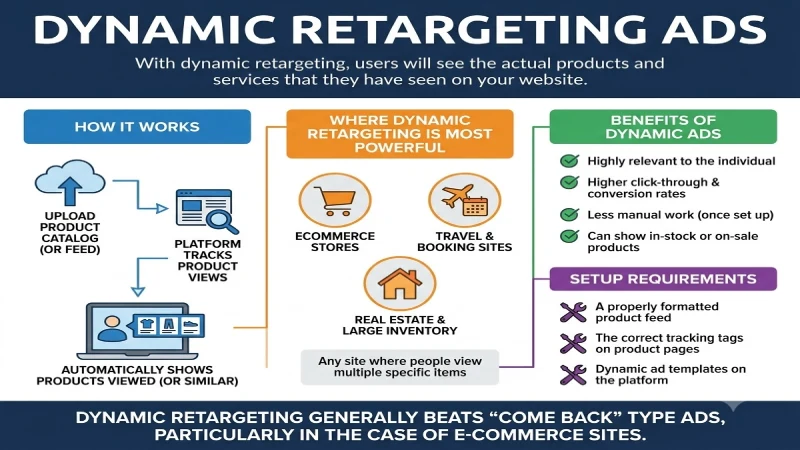
With dynamic retargeting, users will see the actual products and services that they have seen on your website.
How it works
- You upload a product catalog (or feed).
- The platform tracks which products someone viewed.
- When that person sees your ad, it automatically shows the products they looked at (or similar ones).
Where dynamic retargeting is most powerful
- Ecommerce stores with many products
- Travel and booking sites
- Real estate or large inventory businesses
Any site where people view multiple specific items
Benefits of dynamic ads
- Highly relevant to the individual
- Higher click-through and conversion rates in most cases
- Less manual work once the catalog is set up correctly
- Can show products that are still in stock or on sale
Setup requirements
- A properly formatted product feed
- The correct tracking tags on product pages
- Dynamic ad templates on the advertising platform
Dynamic retargeting generally beats “come back” type ads, particularly in the case of e-commerce sites.
Cross-Channel Retargeting
People move between platforms. A strong retargeting strategy often reaches them on more than one channel.
Common cross-channel combinations
- Google + Meta (Facebook/Instagram)
- Meta + Google + YouTube
- Website retargeting + email remarketing
- Paid social + programmatic display
Why cross-channel works
- People use different platforms at different times.
- Being able to see your brand on multiple platforms builds trust and creates better recall.
- This message will vary depending on the specific platform used for the message (Instagram shorter message and Google Display longer message).
Practical tips
- Use the most powerful two channels to start, rather than try and use everything.
- Maintain consistency with the message but adjust it according to the channel.
- Implement frequency capping such that no one sees too many ads on any one channel or combination of channels.
- Exclude converters on all channels where possible so you are not marketing to individuals who have taken the desired action.
Cross-channel retargeting performs optimally when there is high alignment between the audience and creative elements.
Retargeting Frequency Capping
Too much advertising results in frustrations on the side of the audience, hence reducing the effectiveness of your ads. Frequency capping is the method that makes sure that you do not bombard your viewer with too many repetitive ads.
Why frequency matters
Too low → you miss opportunities
Too high → ad fatigue, higher costs, negative brand feeling, and more people hiding or reporting your ads
Typical frequency guidelines (general starting points)
| Audience Type | Suggested Frequency Range (per week) | Notes |
| Cart abandoners | 5–10 | Higher intent, can handle more |
| Product page visitors | 4–8 | Medium-high intent |
| General website visitors | 3–6 | Lower intensity |
| Past customers | 2–5 | Be careful not to overdo it |
These numbers are only estimates. The perfect number depends on your market, your proposition, creativity, and selling techniques.
How to control frequency
- Set frequency caps at the ad set or campaign level when the platform allows it.
- Monitor the frequency metric in your reports.
- Refresh creative regularly so people do not see the exact same ad too many times.
- Exclude people who have converted.
- Rotate different messages (for example, testimonial ads, offer ads, reminder ads).
Good frequency management keeps your retargeting effective without becoming annoying.
Building a Strong Retargeting System
An effective retargeting setup usually includes:
- Clean tracking (Pixel, tag, or Conversions API)
- Well-structured audience lists based on intent
- Exclusion of converters
- A mix of generic and dynamic ads where relevant
- Sensible frequency controls
- Regular creative updates
- Testing across at least one or two main channels
It should be noted that retargeting does its magic when done in tandem with other marketing activities. Start with prospecting campaigns and bring in traffic. Retarget to close more deals from your audience.
Make it easy. Begin with some high-intent audience segments (abandoned cart, high-value pages, customers), make sure you have the right ads and frequency control. Only when you succeed there, move on to dynamic advertising and channels.
People will be more inclined to revisit the website and purchase the product when seeing the ads that trigger their memory of an already interested object. This is the main idea of retargeting.
Frequently Asked Questions
Is retargeting the same as remarketing?
In practice, yes. Remarketing is the term Google uses more often, while retargeting is more common on other platforms. Both mean advertising to people who previously interacted with your business.
How long should someone stay in a remarketing list?
It depends on your sales cycle. Common settings are 30, 60, or 90 days. Longer durations can work for high-consideration products.
Do I need dynamic ads for retargeting to work?
No. Simple static or video retargeting ads can still perform well. Dynamic ads usually work better when you have a product catalog and many items.
Can retargeting work with a small website?
Yes, but you need enough visitors to build meaningful audience sizes. Very low-traffic sites may need to rely more on customer lists or engagement audiences.
How often is too often for retargeting ads?
If frequency goes above 7–10 per week for most audiences, performance often drops and annoyance increases. Monitor results and adjust.
To take the next step, see our detailed guide on Ad Copywriting Techniques