

Introduction
The current state of cybersecurity in digital transformation sees organizations using digital platforms to enhance their communication, customer experience, and business processes. Nowadays, companies rely heavily on cloud-based solutions, online payments, automation systems, technologies that support remote working, mobile apps, and digital customer platforms.
Cybersecurity from our digital transformation guide.
However, digital transformation not only brings various benefits for the company but also adds cybersecurity challenges. According to IBM’s Artificial Intelligence & Cybersecurity guide, organizations must strengthen cybersecurity as digital technologies expand because cyber threats continue to evolve alongside digital transformation.
Since more data is now being stored by organizations on the internet and with various interconnected systems through the internet, the actions of cybercriminals have increased. This has involved ransomware, phishing, passwords stealing, malware infections, and data breaches.
Cybersecurity is no longer only an IT concern. It has become an important business priority.
Without proper cybersecurity protection, businesses may face:
- Financial losses
- Data theft
- Customer trust issues
- Legal problems
- Operational disruption
- System downtime
- Reputation damage
It is important for contemporary organizations to secure the customers’ data, employees’ data, payment gateways, cloud services, and operations from any kind of cyber threats.
This cybersecurity guide presents the concepts of cybersecurity during the digital transformation process in easy language. The cybersecurity guide discusses cybersecurity best practices, zero trust security, cloud security threats, ransomware prevention, data privacy laws, business cyber threats, cybersecurity techniques, and future of cybersecurity.
What is Cybersecurity in Digital Transformation?
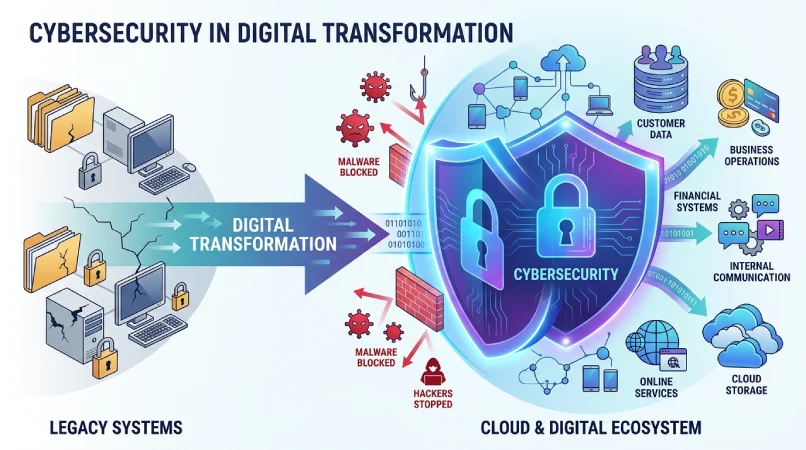
Cybersecurity in transformation is about keeping digital systems safe. This means protecting business networks, software, cloud platforms and data from cyber threats. This is important when businesses start using technologies.
As companies switch from systems to digital platforms Cybersecurity in digital transformation becomes very important, for protecting:
- Customer information
- Financial data
- Business operations
- Internal communication
- Online services
- Cloud storage systems
Digital transformation is really changing things it is making systems connected to the internet. This can be a problem because it can also make these systems more vulnerable to security issues if the businesses that use them do not take the steps to protect themselves. It is a deal and businesses need to be careful, with it.
Why Cybersecurity Matters in Modern Business
Businesses today handle large amounts of digital information every day.
This includes:
- Customer records
- Payment information
- Employee details
- Financial reports
- Business documents
- Online transactions
Cyberattacks can damage both business operations and customer trust.
Common Reasons Cybersecurity is Important
| Cybersecurity Goal | Business Benefit |
| Protect customer data | Improves trust |
| Prevent financial loss | Reduces business risk |
| Avoid operational disruption | Maintains productivity |
| Protect online systems | Supports business continuity |
| Improve compliance | Reduces legal problems |
Ignoring cyber security may lead to problems that the organization would have to deal with for a long period of time.
How Digital Transformation Increases Cybersecurity Risks
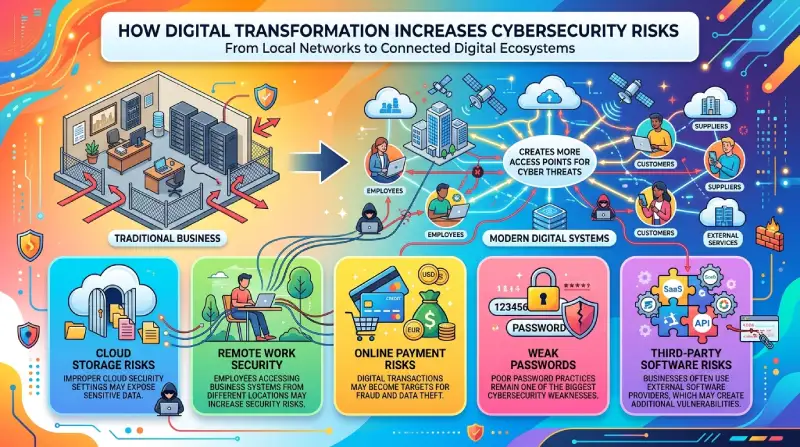
The traditional business systems usually worked on local office networks. The modern digital business systems operate from different places around the world.
This creates more access points for cyber threats.
Common Digital Transformation Security Risks
Cloud Storage Risks
Improper cloud security settings may expose sensitive data.
Remote Work Security
Employee access of business systems from diverse locations could pose security threats.
Online Payment Risks
Cybercrimes can target electronic payments during transactions.
Weak Passwords
Businesses make use of third-party software vendors, who themselves pose additional threats.
Third-Party Software Risks
The application software is designed by third parties in the form of software companies, creating more security risks
Common Cybersecurity Threats Businesses Face
Phishing Attacks
These phishing attacks try to make employees reveal their details through emails.
These attacks often target:
- Passwords
- Banking details
- Employee accounts
Malware
Malware is defined as malicious software intended to cause damage.
Examples include:
- Viruses
- Spyware
- Trojans
Ransomware
A ransomware attack involves holding computers and files hostage by the attackers.
The ransomware is regarded as the greatest cybersecurity threat to businesses.
Data Breaches
A data breach is an instance whereby an unauthorized individual accesses confidential information.
This may include:
- Customer data
- Financial information
- Business documents
Insider Threats
Security threats can be created inadvertently or purposefully by employees or contractors.
Cybersecurity Best Practices for Business
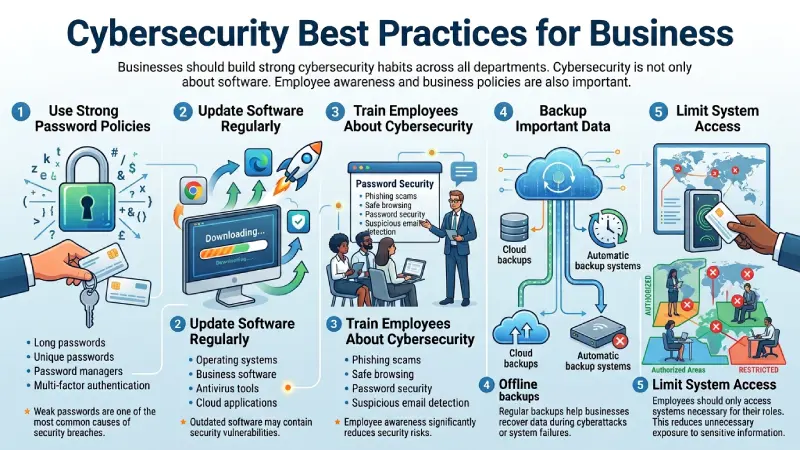
Businesses need to develop good cybersecurity practices throughout the company.
Cybersecurity is not only about software. Employee awareness and business policies are also important.
Train teams via change management for digital transformation.
Use Strong Password Policies
Businesses should encourage:
- Long passwords
- Unique passwords
- Password managers
- Multi-factor authentication
Poor passwords are one of the leading causes of security threats.
Update Software Regularly
Outdated software may contain security vulnerabilities.
Businesses should regularly update:
- Operating systems
- Business software
- Antivirus tools
- Cloud applications
Train Employees About Cybersecurity
Employees should understand common cyber threats.
Training topics should include:
- Phishing scams
- Safe browsing
- Password security
- Suspicious email detection
Employee awareness significantly reduces security risks.
Backup Important Data
Backups ensure that companies can retrieve their data in case of an attack or technical difficulties.
Businesses should maintain:
- Cloud backups
- Offline backups
- Automatic backup systems
Limit System Access
Employees should only access systems necessary for their roles.
This reduces unnecessary exposure to sensitive information.
Cybersecurity Best Practices Table
| Security Practice | Purpose |
| Strong passwords | Prevent unauthorized access |
| Employee training | Reduce human errors |
| Software updates | Fix vulnerabilities |
| Data backups | Improve recovery |
| Multi-factor authentication | Improve login security |
| Access control | Protect sensitive systems |
Zero Trust Security Model
Zero trust security architecture is gaining significance in contemporary cybersecurity policie
Conventional security architectures used to trust the user once he or she was in the network. Zero trust security works differently.
Zero trust assumes that no user or device should automatically receive trust.
Every user, device, and request must be verified continuously.
Core Principles of Zero Trust Security
Verify Every Access Request
Users must confirm identity before accessing systems.
Limit Access Permissions
Employees only receive access needed for their specific tasks.
Continuous Monitoring
Organizations always keep track of system activity.
Benefits of Zero Trust Security
| Benefit | Impact |
| Better access control | Reduced internal risk |
| Improved monitoring | Faster threat detection |
| Stronger security | Better protection |
| Reduced data exposure | Lower breach risk |
The zero trust approach to security is particularly valuable for companies that utilize cloud computing technology.
Secure your cloud computing adoption.
Cloud Security Risks
While cloud computing makes it easier for companies to increase their flexibility and cut down on costs associated with maintaining an IT infrastructure, there are security issues with using cloud computing technology.
It is important for companies to be aware of the typical cloud security concerns before uploading their valuable information into the cloud environment.
Common Cloud Security Risks
Misconfigured Cloud Settings
Improper settings may expose sensitive information publicly.
Weak Access Controls
Poor account management increases unauthorized access risks.
Data Loss
Accidental deletion or system failures may affect cloud data.
Third-Party Security Risks
Cloud providers may also face cybersecurity incidents.
How Businesses Improve Cloud Security
Businesses can improve cloud security by:
- Using strong authentication
- Encrypting sensitive data
- Limiting access permissions
- Monitoring cloud activity
- Choosing trusted providers
Ransomware Protection Strategies
There is a rise in ransomware attacks across the world targeting business organizations.
This is due to the heavy reliance on computer systems in business operations.
Common Ransomware Protection Strategies
Regular Data Backups
Businesses should maintain secure backups disconnected from main systems.
Employee Awareness Training
Employees should avoid suspicious attachments and unknown links.
Endpoint Protection Software
Security software helps detect malicious activity.
Network Segmentation
Separating systems reduces ransomware spread across networks.
Incident Response Planning
Businesses should prepare recovery plans before attacks happen.
Ransomware Protection Comparison Table
| Protection Strategy | Purpose |
| Data backups | Recover lost files |
| Security software | Detect threats |
| Employee training | Prevent phishing attacks |
| Access control | Reduce system exposure |
| Response planning | Faster recovery |
Compliance and Data Privacy Regulations
Companies that deal with customers’ data have to abide by privacy and security policies.
Data privacy policies can ensure the protection of sensitive information from being misused.
Why Compliance Matters
Businesses that ignore privacy regulations may face:
- Legal penalties
- Financial losses
- Customer trust issues
- Reputation damage
Common Areas Covered by Privacy Regulations
Customer Data Collection
Businesses should clearly explain how data is collected.
Data Storage Protection
Sensitive information should remain secure.
User Consent
Customers should understand how businesses use their information.
Data Access Controls
Only authorized individuals should access sensitive records.
Importance of Data Privacy
Customers today are becoming more concerned about their privacy and online security issues.
Companies that take care of their clients’ data tend to create better trust and relationships with them.
Cybersecurity for Remote Work Environments
With the advent of remote working, many security problems arise.
Employees may access systems from:
- Home networks
- Personal devices
- Public internet connections
Businesses should improve remote security through:
- VPN systems
- Secure login authentication
- Device management policies
- Employee training
Role of Artificial Intelligence in Cybersecurity
AI systems are increasingly used in cybersecurity operations.
AI can help businesses:
- Detect unusual activity
- Monitor network traffic
- Identify suspicious behavior
- Improve threat detection speed
However, the same criminals could be using AI to perpetrate more advanced attacks.
Common Cybersecurity Mistakes Businesses Make
Ignoring Employee Training
Human error remains one of the biggest cybersecurity risks.
Weak Password Practices
Simple passwords create major vulnerabilities.
Delaying Software Updates
Outdated systems often become attack targets.
Poor Backup Planning
Without backups, businesses may struggle to recover after attacks.
Overlooking Small Threats
Small security issues may eventually become major problems.
Comparison: Traditional Security vs Modern Cybersecurity
| Feature | Traditional Security | Modern Cybersecurity |
| Protection focus | Local systems | Cloud and digital systems |
| Monitoring | Limited | Continuous |
| Access control | Basic login systems | Multi-layer verification |
| Threat response | Reactive | Proactive |
| Employee access | Broad access | Limited permissions |
Industries Most Affected by Cybersecurity Risks
Banking Sector
Banks face threats involving:
- Financial fraud
- Payment theft
- Identity attacks
Healthcare Industry
Healthcare organizations protect:
- Patient records
- Medical systems
- Sensitive health data
Ecommerce Businesses
Online businesses handle:
- Customer accounts
- Payment systems
- Transaction data
Manufacturing Industry
Manufacturers protect:
- Production systems
- Supply chain operations
- Operational technology
Future of Cybersecurity in Digital Transformation
The significance of cybersecurity is going to rise in time as companies adopt technology.
Future cybersecurity trends may include:
- AI-powered threat detection
- Stronger cloud security systems
- Advanced authentication methods
- Automated security monitoring
- Improved privacy regulations
Business organizations that focus on cybersecurity right from the beginning can avoid future risks and instill customer trust.
Frequently Asked Questions (FAQs)
What does cybersecurity in digital transformation mean?
Cybersecurity in digital transformation refers to the protection of digital platforms, cloud computing, and business information from cyber attacks which arise due to the adoption of technology.
Why do companies need cybersecurity?
Cybersecurity provides the appropriate defensive measures to safeguard customer information, funds, processes, and digital platforms against any kind of cyber attack.
What is the zero trust security approach?
The zero trust approach calls for constant user and device verification in place of network access trust.
What are the common threats to cloud security?
Some of the common threats facing cloud computing include lack of proper access controls, misconfiguration, loss of data, and vulnerability through third parties.
How do businesses protect themselves from ransomware attacks?
A business can protect itself from ransomware attacks by backing up its files, educating employees, and implementing access controls.
Conclusion
Nowadays, it is impossible to talk about the strategy of digital transformation without mentioning the issue of cybersecurity. Indeed, due to the fact that companies use cloud computing, web services, automation tools, and other digital means of communication, cybersecurity becomes extremely important.
The negative outcomes that might be brought by cybersecurity threats may be of financial, operational, and reputational nature. Lack of cybersecurity protection for your business may entail some serious consequences for you, including data loss, clients’ distrust, etc.
An efficient cybersecurity strategy implies the use of technologies, cybersecurity awareness, security policies, and monitoring. The company should concentrate on preventing cybersecurity issues, educating employees about them, data security, and overall cybersecurity planning.
As digital business environments keep developing further in 2026 and later, companies can develop safer operations and greater client trust by adopting cybersecurity practices.