

Introduction
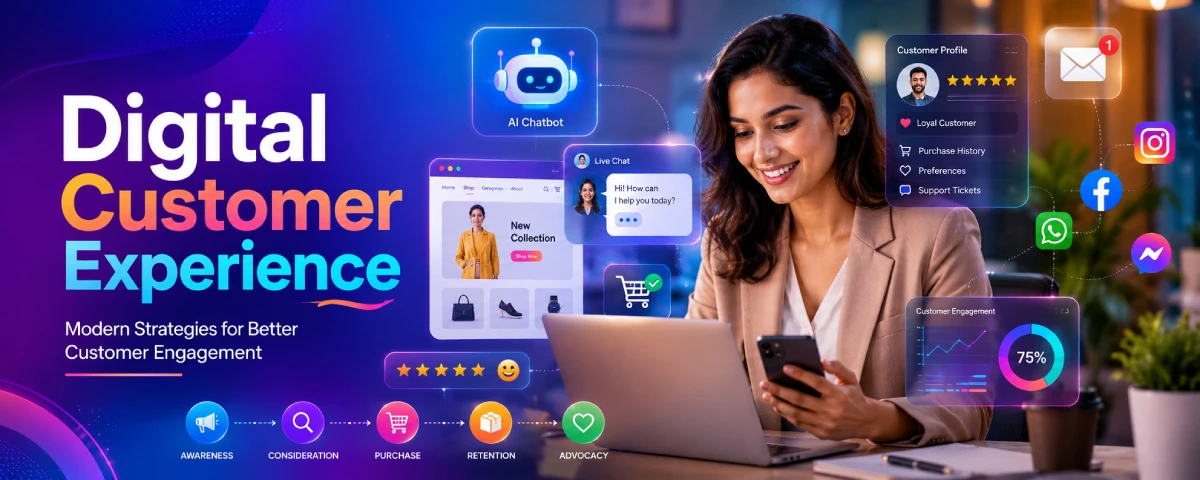
Today, Digital Customer Experience companies are not competing just by offering a good product or better price. The customer experience has become one of the main factors that influence brand loyalty or switch from other brands. It is highlighted in the State of the Connected Customer report by Salesforce, the expectations of customers have changed and now they expect more personal, connected and seamless experience.
Customer experience from our digital transformation pillar
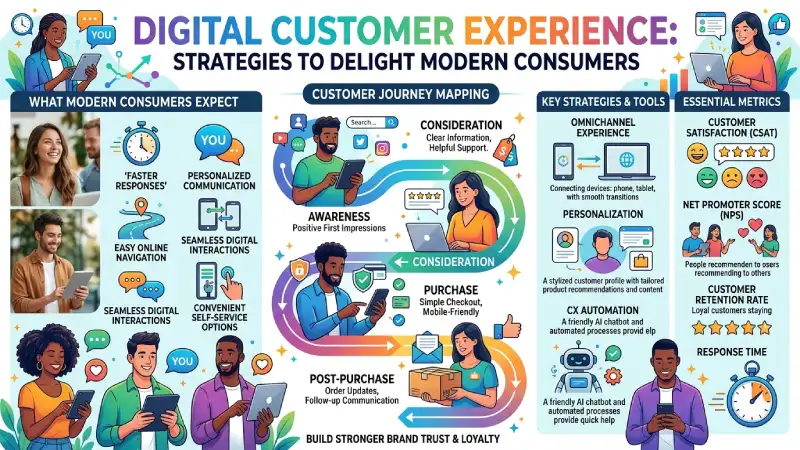
In today’s market, customers want immediate interactions, beautiful web sites, mobile-friendly experiences, personal advice, fast responses and more. Those companies which cannot provide customers with an outstanding experience lose their trust and engagement.
As the result of this change, the role of digital customer experience has been greatly increasing.
The digital customer experience can be described as the way how customers interact with a company using digital means such as websites, mobile applications, social networks, customer support system, emails, e-commerce and others.
A strong digital customer experience helps businesses:
- Improve customer satisfaction
- Increase customer loyalty
- Build stronger brand trust
- Improve online engagement
- Increase conversions and sales
- Reduce customer frustration
- Improve customer retention
Nowadays all kinds of businesses are putting money into making the customer experience better. The reason is that what customers expect from businesses is getting bigger and bigger all the time. Businesses are doing this because customer expectations are growing fast.
Consumers now expect:
- Faster responses
- Personalized communication
- Easy online navigation
- Consistent support
- Seamless digital interactions
- Convenient self-service options
This guide explains digital customer experience in simple language. Such topics include journey mapping, omnichannel communication, personalization, customer experience automation tools, customer experience metrics, real-life business strategies for improving customer experience, pitfalls of customer experience, and future trends in customer experience management.
What is Digital Customer Experience?
Digital customer experience is the overall experience customers have when interacting with a business through digital platforms.
This includes every digital interaction such as:
- Visiting a website
- Browsing products online
- Using mobile apps
- Contacting customer support
- Receiving marketing emails
- Making online payments
- Interacting on social media
A great digital experience is one that is seamless, fast, and effortless for the customer.
A bad digital experience can cause frustrations and distrust in customers.
Why Digital Customer Experience Matters
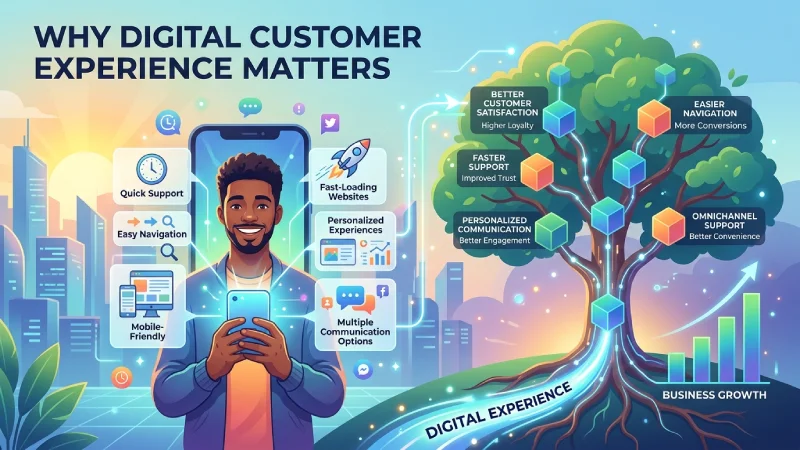
Customer expectations have changed significantly in recent years.
Consumers now prefer businesses that provide:
- Quick support
- Easy navigation
- Mobile-friendly services
- Fast-loading websites
- Personalized experiences
- Multiple communication options
Businesses that improve digital customer experience often see:
| Business Benefit | Impact |
| Better customer satisfaction | Higher loyalty |
| Faster support | Improved trust |
| Personalized communication | Better engagement |
| Easier navigation | More conversions |
| Omnichannel support | Better convenience |
The customer experience is now an integral component of the brand image and business growth.
How Customer Expectations Are Changing
Today’s customers expect convenience at each point in the customer journey process.
Customers want businesses to:
- Respond quickly
- Remember preferences
- Offer smooth online experiences
- Provide easy payment options
- Deliver consistent communication
Furthermore, today’s customers demand support from the businesses via multiple channels.
For example:
The consumer may gain knowledge about a certain product through social media; then proceed to visit the website; make use of live chat for any inquiries; and lastly purchase using a mobile application.
Customer Journey Mapping
Customer journey mapping is a strategy used by companies to understand the way their customers interact with them.
It gives an overview of the entire customer journey.
Stages of the Customer Journey
Awareness Stage
Customers first discover the business through:
- Search engines
- Social media
- Online advertisements
- Recommendations
Businesses should focus on creating positive first impressions.
Consideration Stage
Customers compare products, services, reviews, and pricing.
Businesses should provide:
- Clear information
- Easy navigation
- Helpful support
- Fast-loading pages
Purchase Stage
Customers complete transactions.
Businesses should ensure:
- Simple checkout processes
- Secure payment systems
- Mobile-friendly experiences
Post-Purchase Stage
Customer experience continues after the sale.
Businesses should provide:
- Order updates
- Customer support
- Follow-up communication
- Easy return processes
Benefits of Customer Journey Mapping
| Benefit | Business Impact |
| Better customer understanding | Improved service |
| Reduced customer frustration | Higher satisfaction |
| Improved conversion rates | More sales |
| Better communication | Stronger loyalty |
Customer journey mapping is a technique used by organizations to be aware of shortcomings when interacting with customers.
Omnichannel Customer Experience
Customers today use many digital channels to communicate with businesses.
Omnichannel customer experience involves communicating and serving customers through all channels.
Common Omnichannel Platforms
Businesses often communicate through:
- Websites
- Mobile apps
- Social media
- Live chat
- SMS
- Phone support
Customers expect smooth transitions between these channels.
Example of Omnichannel Experience
A customer may:
- View products on social media
- Visit the website
- Ask questions through live chat
- Receive follow-up emails
- Complete the purchase on mobile
The experience should remain smooth across all stages.
Benefits of Omnichannel Customer Experience
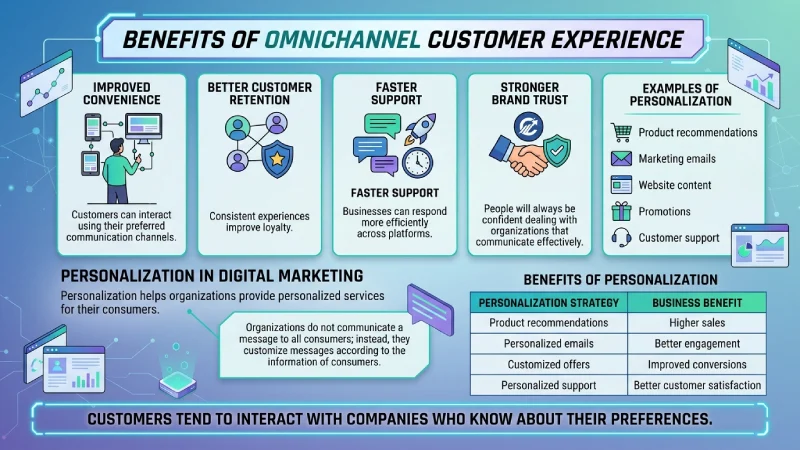
Improved Convenience
Customers can interact using their preferred communication channels.
Better Customer Retention
Consistent experiences improve loyalty.
Faster Support
Businesses can respond more efficiently across platforms.
Stronger Brand Trust
People will always be confident dealing with organizations that communicate effectively.
Personalization in Digital Marketing
Personalization helps organizations provide personalized services for their consumers.
Organizations do not communicate a message to all consumers; instead, they customize messages according to the information of consumers.
Examples of Personalization
Businesses may personalize:
- Product recommendations
- Marketing emails
- Website content
- Promotions
- Customer support
Benefits of Personalization
| Personalization Strategy | Business Benefit |
| Product recommendations | Higher sales |
| Personalized emails | Better engagement |
| Customized offers | Improved conversions |
| Personalized support | Better customer satisfaction |
Customers tend to interact with companies who know about their preferences.
How Businesses Collect Customer Insights
Businesses use several methods to understand customer behavior.
Website Analytics
Tracks:
- Visitor behavior
- Popular pages
- Conversion rates
Customer Feedback
Businesses collect:
- Reviews
- Surveys
- Support feedback
Purchase History
Helps businesses understand customer preferences.
Social Media Insights
Tracks customer engagement and audience behavior.
CX Automation Tools
Tools for customer experience automation will be used by companies to enhance their communication.
Automation allows businesses to react promptly and minimize repetitive tasks.
Common CX Automation Tools
| Tool Type | Purpose |
| Chatbots | Instant customer support |
| Email automation | Automated communication |
| CRM software | Customer management |
| Help desk software | Support ticket management |
| AI recommendation tools | Personalized suggestions |
Benefits of CX Automation
Faster Responses
Automation reduces customer waiting time.
Better Efficiency
Employees spend less time on repetitive tasks.
24/7 Customer Support
Chatbots and automated systems can provide support anytime.
Improved Consistency
Automation helps maintain consistent communication.
Challenges of CX Automation
Businesses should avoid excessive automation.
Too much automation may create:
- Impersonal communication
- Customer frustration
- Poor support experiences
Human support remains important for complex customer issues.
Measuring Customer Experience Metrics
Businesses should regularly measure customer experience performance.
Without measurement, companies may not understand what customers actually feel.
Common Customer Experience Metrics
Customer Satisfaction Score (CSAT)
Measures overall customer satisfaction.
Net Promoter Score (NPS)
Measures customer loyalty and willingness to recommend the business.
Customer Retention Rate
Tracks how many customers continue using the business.
Response Time
Measures how quickly support teams respond.
Customer Effort Score (CES)
Measures how easy it is for customers to complete tasks.
Customer Experience Metrics Table
| Metric | Purpose |
| CSAT | Customer satisfaction |
| NPS | Customer loyalty |
| CES | Ease of interaction |
| Response time | Support efficiency |
| Retention rate | Long-term loyalty |
Tracking these metrics helps businesses improve digital experiences over time.
Common Digital Customer Experience Mistakes
Slow Websites
Slow-loading websites often increase customer frustration.
Poor Mobile Optimization
Many users access services through smartphones.
Websites should work smoothly on mobile devices.
Complicated Navigation
Customers prefer simple and clear navigation.
Ignoring Customer Feedback
Customer feedback helps businesses identify problems.
Inconsistent Communication
Different communication styles across channels may confuse customers.
Digital Customer Experience for Small Businesses
Small businesses can also improve customer experience without large budgets.
Simple improvements include:
- Faster website speed
- Online support options
- Mobile-friendly websites
- Personalized communication
- Easy payment systems
Even small improvements can significantly improve customer satisfaction.
Role of AI in Customer Experience
AI tools are becoming increasingly common in customer experience strategies.
Businesses now use AI for:
- Chatbots
- Recommendation systems
- Automated support
- Customer behavior analysis
While AI can increase efficiency, the firm should ensure human touch in appropriate situations.
Traditional Customer Experience vs Digital Customer Experience
| Feature | Traditional Experience | Digital Experience |
| Communication | Offline only | Multi-channel |
| Customer support | Limited hours | 24/7 options |
| Personalization | Limited | Data-driven |
| Convenience | Slower | Faster |
| Customer feedback | Manual collection | Real-time insights |
Personalize using data-driven decision making
Industries Using Digital Customer Experience Strategies
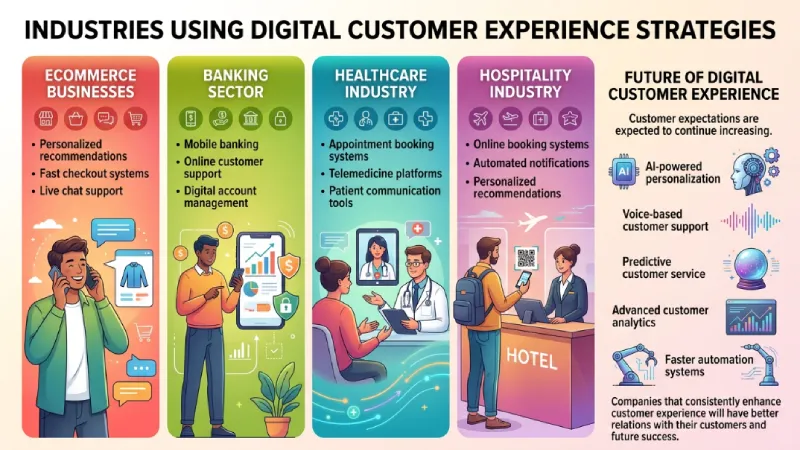
Ecommerce Businesses
Use:
- Personalized recommendations
- Fast checkout systems
- Live chat support
Banking Sector
Banks provide:
- Mobile banking
- Online customer support
- Digital account management
Healthcare Industry
Healthcare providers use:
- Appointment booking systems
- Telemedicine platforms
- Patient communication tools
Hospitality Industry
Hotels and travel companies use:
- Online booking systems
- Automated notifications
- Personalized recommendations
Future of Digital Customer Experience
Customer expectations are expected to continue increasing.
Future trends may include:
- AI-powered personalization
- Voice-based customer support
- Predictive customer service
- Advanced customer analytics
- Faster automation systems
Companies that consistently enhance customer experience will have better relations with their customers and future success.
Frequently Asked Questions (FAQs)
What is digital customer experience?
Digital customer experience is defined by the way consumers engage with businesses on different digital platforms like websites, applications, emails, and other forms of digital communication.
Why is customer experience important?
Customer experience helps improve consumer satisfaction, trust, and overall growth in a business.
What is omnichannel customer experience?
Omnichannel customer experience is about ensuring a seamless flow of information between the consumer and the business through different digital touchpoints.
What is CX automation software?
CX automation software assists companies in automating customer communication and customer management processes.
How does one track customer experience?
Customers’ experience is measured using CSAT scores, NPS score, response time, and other metrics.
Conclusion
It is worth mentioning that the digital customer experience has become an important element of the company’s strategy. Currently, the customer requires an easy and fast interaction via websites, mobile applications, social media sites, and call centers.
Companies using proper digital customer experience strategies are able to improve the loyalty of customers, raise conversions, and even enhance the reputation of their brands.
Nevertheless, it will be a mistake to state that successful customer experience strategies can be implemented via technology only. Companies should also care about the quality of communication, customer knowledge, personalization and employee support.
With the increase in digital interaction, those companies that will invest in customer experience can benefit in the future.
Protect users with cybersecurity in digital transformation