

Introduction
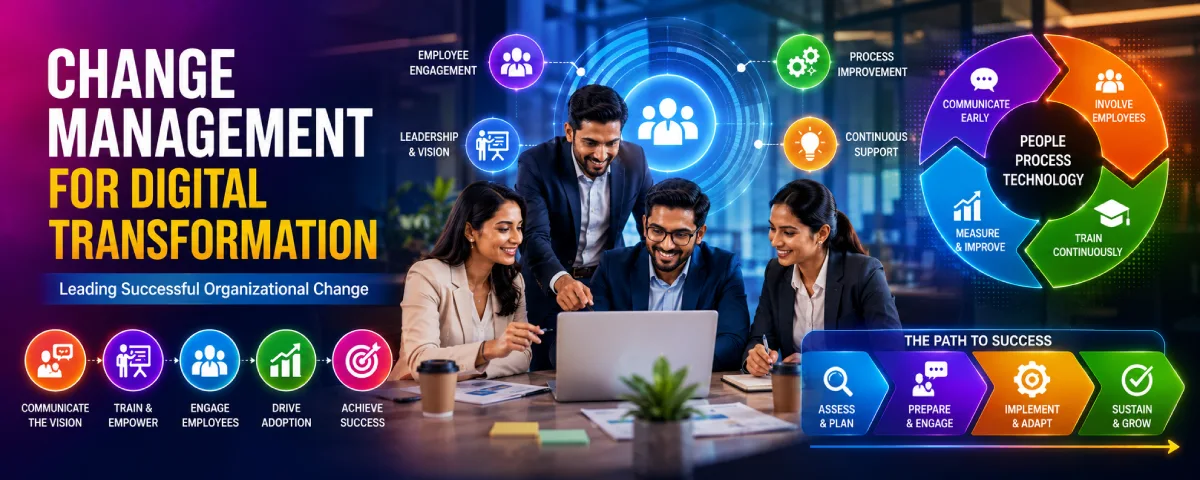
Businesses are changing faster than ever. Companies are adopting cloud systems, automation tools, artificial intelligence, digital communication platforms, and data analytics to improve daily operations and customer experience.
However, technology alone cannot improve a business.
Many digital transformation projects fail because employees struggle to adapt to changes, departments do not communicate properly, or leadership teams focus only on software instead of people.
This is where change management becomes important.
Change management helps businesses prepare employees, improve communication, reduce resistance, and successfully introduce new digital systems into the workplace.
In modern organizations, digital transformation affects almost every department, including:
- customer service
- finance
- operations
- marketing
- HR
- sales
- supply chain management
When companies introduce new technologies without proper planning, employees may feel confused or uncomfortable. Productivity can slow down, mistakes may increase, and teams may resist new workflows.
A strong change management strategy helps businesses:
- improve employee adaptation
- reduce operational confusion
- support digital transformation goals
- improve teamwork
- increase productivity
- create smoother technology adoption
This guide explains change management for digital transformation in simple words. It covers leadership, employee training, communication, resistance to change, agile frameworks, workplace culture, business examples, challenges, best practices, and practical strategies organizations can use during digital transformation.
What is Change Management in Digital Transformation?
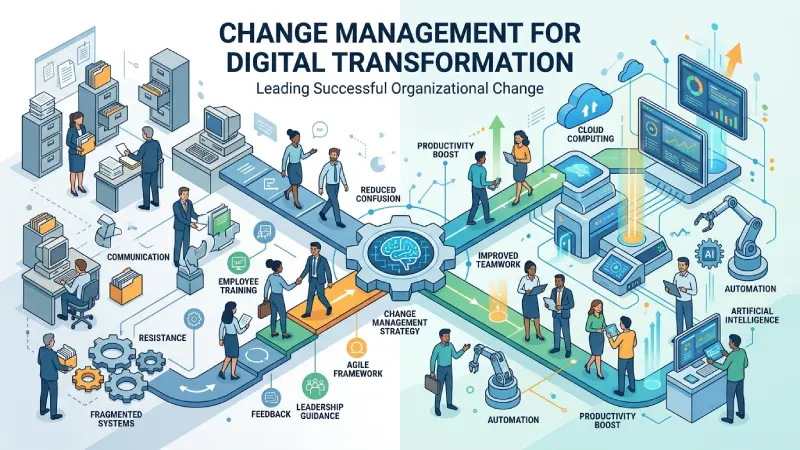
CChange management is the process businesses use to help employees and departments adjust to organizational changes. According to Prosci’s Change Management Methodology, successful change management uses a structured approach to help individuals adopt and sustain organizational change.
In digital transformation, change management focuses on helping people adapt to new technologies, digital workflows, automation systems, and business processes.
The main goal is to make digital transformation smoother and more successful.
Change management usually includes:
- employee communication
- training programs
- leadership planning
- workflow adjustments
- feedback collection
- performance monitoring
Without change management, even good technology systems may fail because employees do not fully understand how to use them.
For example:
| Without Change Management | With Change Management |
| Employees feel confused | Employees understand new systems |
| Resistance increases | Teams cooperate better |
| Productivity slows down | Operations improve gradually |
| Poor communication | Clear transition planning |
| Technology adoption fails | Digital transformation succeeds |
Digital transformation is not only a technology project. It is also a people and business culture project.
Why Change Management Matters in Digital Transformation
Many businesses focus heavily on software, automation, and cloud systems but ignore employee adaptation.
This creates problems during digital transformation.
Employees may:
- resist new workflows
- avoid using digital tools
- feel insecure about job changes
- struggle with learning new systems
- lose confidence during transition periods
Change management helps businesses reduce these problems.
A proper change management strategy improves:
- employee confidence
- workplace communication
- technology adoption
- teamwork
- operational stability
Businesses that manage organizational change properly usually experience smoother digital transformation compared to companies that rush implementation.
Key Reasons Change Management is Important
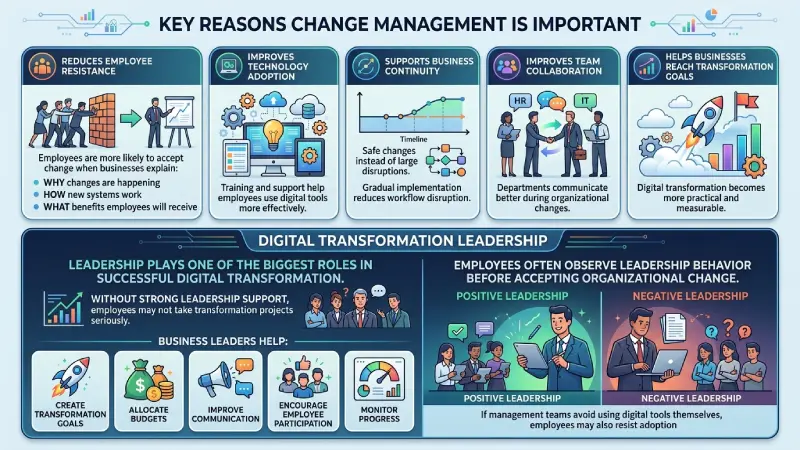
Reduces Employee Resistance
Employees are more likely to accept change when businesses explain:
- why changes are happening
- how new systems work
- what benefits employees will receive
Improves Technology Adoption
Training and support help employees use digital tools more effectively.
Supports Business Continuity
Gradual implementation reduces workflow disruption.
Improves Team Collaboration
Departments communicate better during organizational changes.
Helps Businesses Reach Transformation Goals
Digital transformation becomes more practical and measurable.
Digital Transformation Leadership
Leadership plays one of the biggest roles in successful digital transformation.
Without strong leadership support, employees may not take transformation projects seriously.
Business leaders help:
- create transformation goals
- allocate budgets
- improve communication
- encourage employee participation
- monitor progress
Employees often observe leadership behavior before accepting organizational change.
If management teams avoid using digital tools themselves, employees may also resist adoption.
Responsibilities of Digital Transformation Leaders
Setting Clear Goals
Leaders should explain:
- why transformation is necessary
- what problems need solving
- what improvements are expected
Supporting Employees
Employees need guidance during organizational changes.
Leaders should:
- answer employee concerns
- encourage teamwork
- provide regular updates
Building a Digital Culture
Businesses should create a workplace culture that supports:
- learning
- innovation
- flexibility
- digital adaptation
Monitoring Progress
Leadership teams should track:
- employee adoption rates
- workflow improvements
- customer feedback
- operational performance
Employee Training for Digital Tools
Employee training is one of the most important parts of change management.
Many digital transformation projects fail because employees do not fully understand new systems.
Businesses should not assume workers automatically know how to use digital platforms.
Training programs help employees:
- build confidence
- reduce mistakes
- improve productivity
- adapt faster
Types of Digital Training Businesses Provide
| Training Type | Purpose |
| Software training | Learn business systems |
| Cybersecurity awareness | Reduce security risks |
| Cloud platform training | Improve remote collaboration |
| Automation workflow training | Understand new processes |
| Data management training | Improve reporting accuracy |
Best Practices for Employee Training
Use Simple Instructions
Training should use practical examples instead of technical language.
Provide Hands-On Practice
Employees learn faster through practical experience.
Offer Ongoing Support
Workers may need additional guidance after implementation.
Train Departments Separately
Different teams use different systems.
For example:
- finance teams use accounting software
- customer support teams use CRM systems
- HR teams use employee management platforms
Overcoming Resistance to Change
Resistance to change is common during digital transformation.
Employees may worry about:
- learning new systems
- workflow changes
- increased workload
- job security
- performance expectations
Resistance does not always mean employees dislike technology. Sometimes workers simply feel uncertain about change.
Common Reasons Employees Resist Change
| Cause | Example |
| Fear of job loss | Automation concerns |
| Lack of training | Confusion about software |
| Poor communication | Unclear transformation goals |
| Sudden implementation | Employees feel overwhelmed |
| Weak leadership support | Lack of confidence |
How Businesses Reduce Resistance
Communicate Early
Employees should understand transformation plans before implementation starts.
Introduce Changes Gradually
Businesses should avoid changing everything at once.
Involve Employees
Feedback improves employee participation and trust.
Recognize Employee Efforts
Positive encouragement supports adaptation.
Provide Continuous Support
Employees should feel comfortable asking questions.
Common Reasons Digital Transformation Projects Fail
Many businesses invest heavily in technology but still struggle with digital transformation.
Poor planning is one of the main reasons projects fail.
Common Failure Reasons
Lack of Clear Goals
Businesses sometimes adopt technology without understanding business needs.
Poor Employee Training
Employees cannot use systems properly without support.
Weak Leadership
Transformation projects require strong management involvement.
Ignoring Workplace Culture
Technology changes affect employee behavior and workflows.
Implementing Too Many Tools
Using multiple systems at once creates confusion.
Poor Communication
Employees need regular updates during transformation.
Unrealistic Expectations
Digital transformation takes time.
Businesses should focus on gradual improvement instead of expecting immediate results.
Role of Communication During Organizational Change
Communication is extremely important during digital transformation.
Poor communication increases employee confusion and resistance.
Businesses should clearly explain:
- transformation goals
- implementation timelines
- employee responsibilities
- expected benefits
- workflow changes
Benefits of Good Communication
| Communication Benefit | Impact |
| Clear instructions | Fewer mistakes |
| Regular updates | Better employee trust |
| Employee feedback | Improved adaptation |
| Transparent leadership | Reduced uncertainty |
| Team coordination | Better collaboration |
Best Communication Methods
Businesses may use:
- team meetings
- training sessions
- internal emails
- collaboration platforms
- employee feedback systems
Regular communication helps employees feel involved in the transformation process.
Agile Change Management Framework
Many businesses now use agile change management during digital transformation.
Agile frameworks focus on gradual improvement instead of large sudden changes.
This approach reduces operational risks.
Agile Change Management Principles
Small Improvements
Businesses implement smaller changes step by step.
Faster Feedback
Employees provide feedback regularly.
Flexible Adjustments
Businesses improve systems continuously.
Team Collaboration
Departments work together during implementation.
Benefits of Agile Change Management
| Benefit | Business Impact |
| Faster adaptation | Employees adjust more easily |
| Lower risk | Fewer operational disruptions |
| Better flexibility | Easier process improvement |
| Continuous feedback | Stronger system optimization |
How Different Businesses Handle Change Management
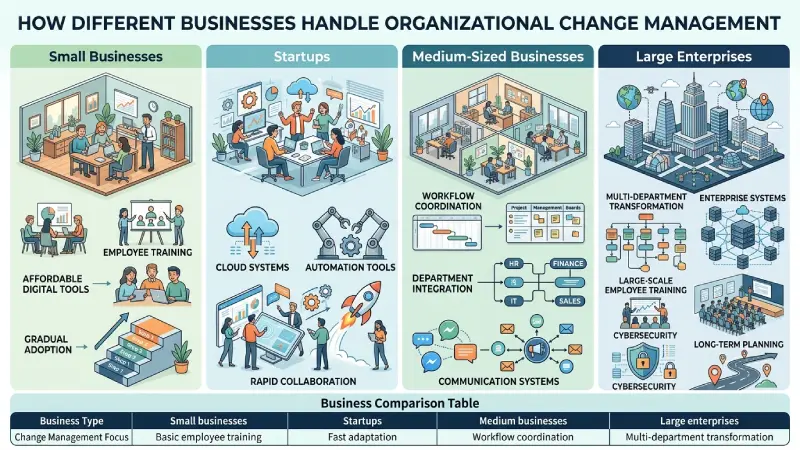
Different businesses manage organizational change differently depending on size, budget, and operational structure.
Small Businesses
Small businesses usually focus on:
- employee training
- affordable digital tools
- gradual adoption
Startups
Startups often adapt faster because teams are smaller and more flexible.
They focus on:
- cloud systems
- automation tools
- rapid collaboration
Medium-Sized Businesses
Medium-sized companies focus on:
- workflow coordination
- department integration
- communication systems
Large Enterprises
Large organizations often manage complex transformation projects involving multiple departments and locations.
They focus on:
- enterprise systems
- large-scale employee training
- cybersecurity
- long-term planning
Business Comparison Table
| Business Type | Change Management Focus |
| Small businesses | Basic employee training |
| Startups | Fast adaptation |
| Medium businesses | Workflow coordination |
| Large enterprises | Multi-department transformation |
Skills Employees Need During Digital Transformation
Modern workplaces require employees to develop new digital skills.
Technology adoption works better when workers improve adaptability and digital knowledge.
Important Employee Skills
Digital Communication
Employees use:
- collaboration platforms
- online meetings
- digital messaging systems
Cloud Software Usage
Many businesses now use cloud-based systems for operations and data storage.
Cybersecurity Awareness
Employees should understand:
- password security
- phishing risks
- safe data handling
Adaptability
Workers should remain flexible during workplace changes.
Collaboration Skills
Digital workplaces depend heavily on teamwork.
Basic Data Understanding
Employees increasingly use dashboards and digital reports.
Technologies That Affect Workplace Change
Several technologies are changing workplace operations.
Artificial Intelligence
AI helps automate repetitive tasks.
Examples include:
- chatbots
- invoice generation
- customer support automation
Cloud Computing
Cloud systems improve:
- remote work
- file sharing
- collaboration
Workflow Automation Tools
Automation software reduces manual processes.
Data Analytics Platforms
Businesses use analytics tools for:
- reporting
- forecasting
- performance tracking
Collaboration Platforms
Communication systems improve teamwork across departments and locations.
Measuring Digital Transformation Success
Businesses should regularly track whether transformation projects are improving operations.
Without measurement, companies may not understand whether investments are delivering results.
Common Performance Indicators
| KPI | Purpose |
| Employee productivity | Measure workflow improvement |
| Customer satisfaction | Evaluate service quality |
| Operational costs | Track savings |
| System adoption rates | Monitor employee usage |
| Response times | Measure efficiency |
| Error reduction | Improve accuracy |
Practical Examples
A company introducing automation software may track:
- time saved
- reduced paperwork
- employee productivity
- customer response speed
Regular measurement helps businesses improve transformation strategies over time.
Change Management Best Practices
Businesses can improve digital transformation success by following practical change management strategies.
Start Small
Gradual implementation reduces risks.
Train Employees Properly
Training improves confidence and productivity.
Communicate Clearly
Employees should understand transformation goals.
Monitor Feedback
Employee feedback helps businesses improve systems.
Avoid Overcomplicated Systems
Businesses should focus on practical technology solutions.
Build a Supportive Workplace Culture
Positive workplace environments improve adaptation.
Review Progress Regularly
Continuous improvement helps businesses optimize digital transformation.
Future of Change Management in Digital Transformation
Workplaces continue evolving as businesses adopt:
- AI systems
- automation platforms
- cloud infrastructure
- remote work technologies
- advanced analytics
Future change management strategies may focus more on:
- employee adaptability
- digital collaboration
- continuous learning
- workplace flexibility
- cybersecurity awareness
Businesses that support employees properly during transformation may achieve stronger long-term growth and operational stability.
Frequently Asked Questions (FAQs)
What is change management in digital transformation?
Change management helps businesses prepare employees and departments for digital transformation by improving communication, training, and workflow adaptation.
Why is change management important?
It helps reduce employee resistance, improve technology adoption, and support smoother business transformation.
What causes resistance to change?
Common reasons include:
- fear of job changes
- lack of training
- poor communication
- sudden implementation
How can businesses improve employee adaptation?
Businesses should:
- provide training
- communicate clearly
- introduce changes gradually
- support employee feedback
What is agile change management?
Agile change management focuses on smaller improvements, faster feedback, and continuous adaptation during transformation projects.
How do businesses measure digital transformation success?
Businesses often track:
- productivity
- customer satisfaction
- operational efficiency
- employee adoption
- cost reduction
Conclusion
Change management plays a major role in successful digital transformation.
Technology alone cannot improve business operations if employees struggle to adapt to workplace changes.
Businesses that focus on communication, employee training, leadership support, gradual implementation, and collaboration often experience smoother transformation results.
Modern organizations continue adopting cloud systems, automation tools, AI platforms, and digital communication technologies to improve efficiency and customer experience.
However, long-term success depends not only on technology adoption but also on how businesses manage organizational change.
Companies that support employees properly, encourage teamwork, and create flexible workplace cultures may improve productivity, reduce resistance, and build stronger digital transformation strategies for the future.