


Should you have an affiliate website, then search engine optimization is definitely among the most effective techniques that guarantee steady traffic. Once your reviews and comparisons are featured in Google’s ranking positions, you can generate affiliate revenue for several months or even years with a single blog post.
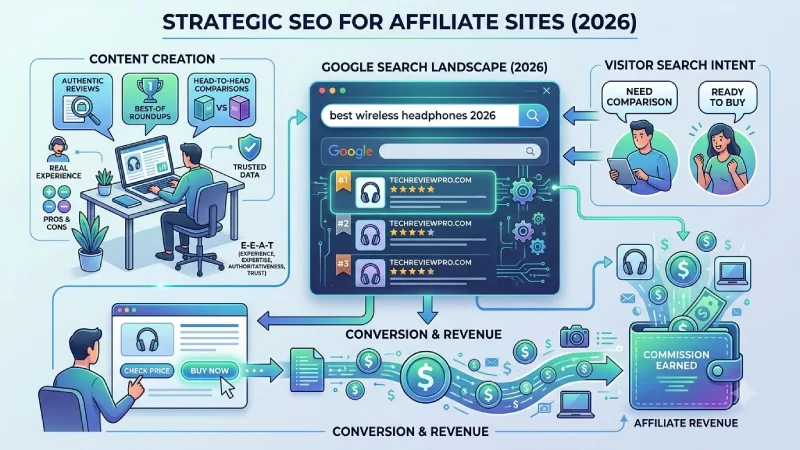
What needs to be noted at this point is the reality that the process of SEO has become difficult these days due to the fact that Google tends to promote only authentic content. This guide will tell you everything about the techniques that remain relevant in 2026.
Keyword Research for Affiliates
Good affiliate SEO starts with the right keywords. You want terms that people use when they are close to buying.
Types of keywords that usually convert better
| Keyword Type | Example | Why It Works for Affiliates |
| Product + review | “Sony WH-1000XM5 review” | High purchase intent |
| Best + product + year | “best wireless headphones 2026” | People comparing options |
| Product vs product | “Sony vs Bose headphones” | Decision stage |
| Product + alternative | “Affordable alternative to Dyson” | Looking for options |
| Problem + solution | “best noise cancelling headphones for travel” | Specific need |
Simple way to find keywords
- Choose the products which need promotion.
- Make use of free tools (Google Keyword Planner, AlsoAsked, Google Autocomplete).
- Identify the keywords that suggest that the user plans on buying something.
- Check out the difficulty level of these keywords in ranking. Long-tail keywords tend to be less difficult to rank when you have a newly built website.
- Cluster these keywords to write only one comprehensive page on them.
Consider only those keywords that you can actually add some value to. If all the top listings are very large websites with vast resources at their disposal, then it may make more sense to go for long-tail variations.
Product Review Page Structure
A good product review page should feel helpful, not salesy. People should finish the page feeling like they understand the product better.
Structure that works well
- Clear introduction – What the product is and who it is for
- Quick verdict or rating summary (so busy readers get the point fast)
- Pros and cons
- The sections covered in detail (design, performance, features, ideal users)
- Comparison with a couple of alternatives
- Final recommendation
- Where to buy (with your affiliate links)
Extra elements that help
- Real photos or screenshots if possible
- Your personal experience or testing notes
- Clear headings so people can scan
- A table for key specifications
- Honest mention of downsides
Pages that only say positive things and push the link hard tend to perform worse over time. Balanced, useful reviews build more trust and usually rank better.
Comparison and Roundup Posts
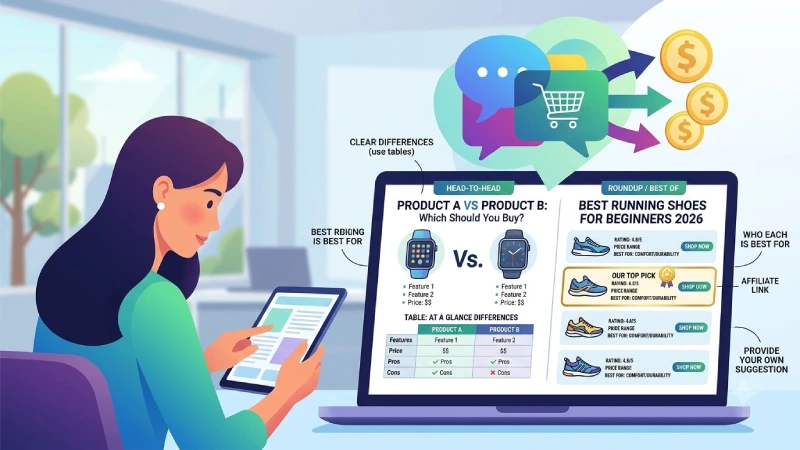
Comparison posts and “best of” roundups are some of the strongest content types for affiliate sites.
Why they work
- People actively look for them when they are ready to buy
- They naturally include multiple affiliate products
- They can rank for several related keywords
Two common formats
| Format | Best Used When | Example Title |
| Head-to-head | Two strong competing products | “Product A vs Product B: Which Should You Buy?” |
| Roundup / Best of | Several good options in a category | “Best Running Shoes for Beginners 2026” |
Tips for stronger comparison pages
- Make the differences clear (use tables)
- Say who each product is best for
- Update the post when products change
- Provide your own suggestion without remaining neutral
- Save the layout from being cluttered
This is quite a common occurrence, with them forming part of the most profitable products offered on the affiliate website.
Link Building for Affiliate Sites
Getting other sites to link to your pages is still important, but it is harder for pure affiliate sites than for other types of content.
Realistic link building approaches
- Create content that people naturally want to reference (original data, detailed tests, useful tools)
- Reach out to sites in your niche with a genuine reason (not just “please link to me”)
- Build relationships in your industry
- Improve and update your best pages so they stay worth linking to
- Guest posting when you have something useful to say
- Fixing broken links on other sites (when it makes sense)
What usually does not work well anymore
- Buying links
- Mass directory submissions
- Irrelevant guest posts just for the backlink
- Automated link schemes
For most new affiliate sites, the best early strategy is to focus on making the content genuinely better than what already ranks. Links tend to follow useful content more easily than the other way around.
E-E-A-T for Affiliate Content
Google analyzes Experience, Expertise, Authoritativeness, and Trustworthiness (E-E-A-T). This is highly significant for affiliate sites since these sites may affect purchasing decisions.
How to show E-E-A-T on affiliate sites
- Write from real experience whenever possible (“I tested this for three weeks”)
- Be transparent about affiliate relationships
- Reveal who’s responsible for the website (about page, biographies of the authors)
- Ensure that the information is updated and correct
- Don’t exaggerate
- Reference sources whenever you use any facts and data
- Make yourself easily accessible to the readers
Small things that help trust
- Clear “how we test” or “how we rate” explanations
- Updated dates on posts
- Balanced pros and cons
- Professional but human writing tone
You don’t have to be the greatest expert on earth. The task at hand is to prove that you are thorough, truthful, and innovative.
Putting It All Together
An effective approach for SEO for the affiliate website could be:
- Find keywords with real buying intent that you can cover better than existing pages.
- Build strong product review and comparison pages with clear structure.
- Make the content genuinely useful and honest.
- Improve the pages over time based on what you learn.
- Earn links by creating content worth linking to.
- Show real experience and transparency so both users and Google trust the site.
There are very few affiliate SEO campaigns that deliver quick results. It takes several months of hard work to make the website generate good traffic. They are able to make success because they do not take any shortcuts, but work hard.
This entails starting with a few keywords and then producing the best pages you can and building on them constantly.
Frequently Asked Questions
- How long does it take for an affiliate site to rank?
It varies. Some long-tail pages can start ranking in a few months. Competitive terms often take longer. Consistency and good content speed things up. - Can new sites rank product reviews?
Yes, especially for long-tail and less competitive keywords. Competing with big sites for broad terms is much harder at the beginning. - Should I focus more on reviews or comparison posts?
Both are useful. Comparison and roundup posts often earn more because they target people who are actively deciding. Reviews help build depth and trust. - How important are backlinks for affiliate sites?
They still matter, but content quality and user experience matter more than ever. Focus on earning links rather than forcing them. - Do I need to update old affiliate posts?
Yes. Products change, prices change, and new options appear. Strong page updates are among the most ROI-effective actions in affiliate SEO.
Conclusion
In 2026, SEO of affiliate sites remains relevant; nevertheless, it is beneficial for quality content rather than gimmicks. Make sure keywords are associated with users’ intentions; make review and comparison pages useful, show your experience, and earn credibility.
It takes some time. Successful affiliate websites were not created in several days; they are a result of creating better and better pages. Just start with good pages and keep doing the same.