


By promoting any product through the use of affiliate links, you become responsible for doing some very specific things. Failure to follow these rules may lead to very severe consequences, including the deletion of your content or even banning of your account. But there is good news — everything is simple when you get the hang of it.
In this guide, I will tell you about some of the most important things you should know from a legal perspective: FTC disclosure rules, where to put your disclosures, how GDPR impacts affiliate marketing, tax obligations, and why you need to read program terms and conditions.
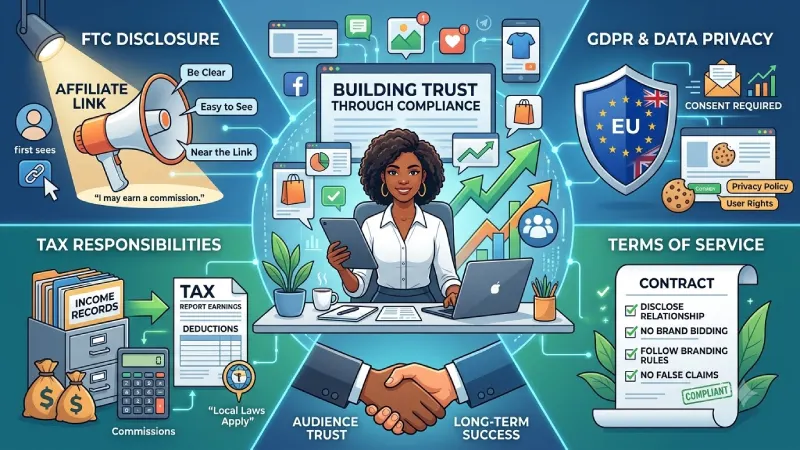
FTC Affiliate Disclosure Rules
For the United States of America, there are requirements set by the Federal Trade Commission (FTC) stating that when writing about links to which you can make some money from, you must disclose the fact.
What the FTC expects
- The disclosure must be clear and easy to understand
- It has to be positioned where it can attract attention.
- It has to be there when the reader is still thinking of clicking on that link.
- You cannot hide it behind any hashtag or position it at the bottom of the page.
Simple phrases that work
- “This post contains affiliate links. I may earn a commission if you buy through them.”
- “As an Amazon Associate I earn from qualifying purchases.”
- “Affiliate link – I may earn a commission at no extra cost to you.”
- “#ad” or “#affiliate” when space is limited (but clearer language is better)
You do not need fancy legal wording. You just need to be honest and upfront.
Disclosure Placement Best Practices
The placement of your disclosure is just as important as the content itself.
Good placement examples
| Content Type | Best Place for Disclosure | Why It Works |
| Blog post | Near the top, before the first affiliate link | Readers see it early |
| Product review | Right after the introduction or before the first link | Clear and hard to miss |
| YouTube video | Spoken in the video + written in the description | Covers both viewers and readers |
| Instagram post | At the beginning of the caption | Visible without clicking “more” |
| Instagram Story | Text on the screen near the link sticker | Impossible to miss |
| Near the top or right before the links | Transparent to subscribers |
What to avoid
- Putting the disclosure only at the very end
- Hiding it among 20 hashtags
- Using vague words like “partner” without explanation
- Assuming people already know you use affiliate links
When in doubt, make the disclosure more visible rather than less. Clear disclosures rarely hurt conversions. Hidden ones can damage trust and create legal risk.
GDPR and Affiliate Marketing
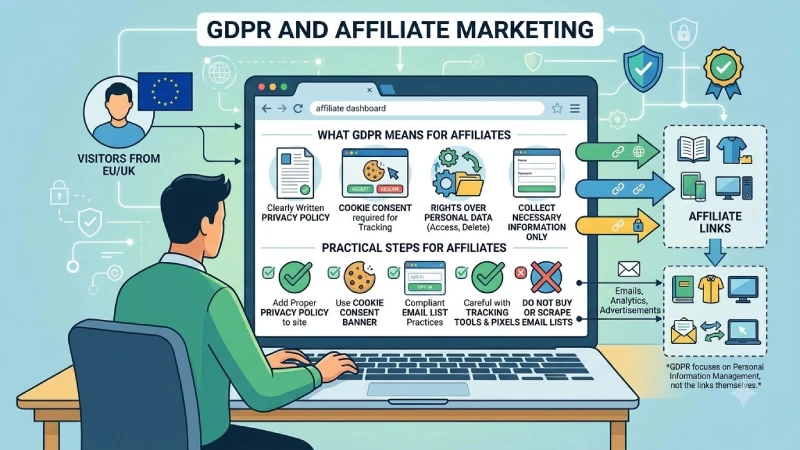
GDPR compliance will be applicable for you if you have visitors from the European Union (or the United Kingdom) even though you may reside elsewhere.
What GDPR means for affiliates
- You require a clearly written privacy policy stating what information you are collecting
- If you are using cookies or tracking, then you will require the consent of your visitors for that
- People have certain rights over their personal data (accessing the data, deleting it, etc.)
- You are not supposed to collect any unnecessary information
Practical steps most affiliates should take
- Add a proper privacy policy to your site
- Use a cookie consent banner if required
- Make sure your email list practices are compliant
- Be careful with tracking tools and pixels
- Do not buy or scrape email lists
But GDPR focuses on how you manage your personal information rather than the affiliate links itself. However, because affiliate sites collect emails, analytics, and advertisements, it’s important to learn the basics.
Affiliate Tax Responsibilities
Making money from affiliate marketing is taxable in many nations. This will depend on your specific location.
General points that apply in many places
- Affiliate commissions count as income
- You are usually responsible for reporting that income
- Some platforms send tax forms when you earn above a certain amount (for example, in the US)
- You may be able to deduct related business expenses (website costs, tools, advertising, etc.)
- If affiliate income becomes significant, you may need to make estimated tax payments
What you should do
- Keep records of your earnings and expenses
- Check the tax rules in your country
- Consider speaking with a tax professional once your income grows
- Do not ignore tax forms that affiliate platforms send you
Tax laws differ considerably from country to country, hence it is one area that calls for local advice. The safest approach here is treating affiliate income just like any other income earned through self-employment.
Affiliate Program Terms of Service
Every affiliate program has its own rules. Breaking them can get your account closed and your commissions withheld.
Common rules you will see
- You must disclose your affiliate relationship
- You cannot use certain advertising methods (for example, some programs restrict paid search on brand terms)
- You cannot make false claims about the product
- You must follow trademark and branding guidelines
- Cookie stuffing or forced clicks are almost always banned
- Some programs restrict the types of websites that can join
Good habits
- Read the terms when you join a new program
- Check for updates from time to time
- Keep copies of all important correspondence
- If anything is not clear, contact the affiliate manager
Loss of a valuable affiliate account as a result of breaching the guidelines is something that could have been prevented. Spending a few minutes on reading them would prevent a lot of grief.
Practical Compliance Checklist
Here is a simple checklist you can use:
- Clear affiliate disclosure on every page or post that has links
- Disclosure placed where people will actually see it
- Privacy policy on your website
- Cookie consent if you have EU traffic
- Records of your earnings and expenses
- Basic understanding of your local tax obligations
- Awareness of the main rules of the programs you promote
You do not need to become a lawyer. All you have to do is speak clearly to your audience and be mindful of the rules that dictate your behavior.
Final Thoughts
Compliance with the law in affiliate marketing primarily depends on honesty and organization. Inform people when you have a chance to earn a commission, respect the privacy of your readers and process their data responsibly, report your earnings, and comply with the terms of the programs you participate in.
This will secure you and build the trust between you and your audience. Most of the readers do not find affiliate links offensive as long as they are transparent and honest recommendations.
Be honest, organized, and occasionally check the program’s rules. This is more than sufficient to keep you within the safe zone as you produce value and make money.
Frequently Asked Questions
- Do I really need to disclose every affiliate link?
Yes. In the US and many other countries, clear disclosure is required whenever you can earn a commission from a link. - Is “#ad” enough as a disclosure?
It can be acceptable in tight spaces like social media, but clearer language is usually better. The disclosure should be easy for an average person to understand. - Does GDPR apply if I live outside the EU?
It can, if you have visitors or customers in the EU and process their personal data. A privacy policy and proper cookie handling are wise regardless of where you live. - Do I have to pay taxes on small affiliate earnings?
In most countries, affiliate income is taxable even if the amount is small. Rules and thresholds vary, so check your local requirements. - What happens if I break an affiliate program’s rules?
The program can suspend or terminate your account and may withhold unpaid commissions. In serious cases, repeated violations can create bigger problems.
Conclusion
There are certain legal obligations in affiliate marketing. It is important to disclose your affiliate links, make the disclosures visible, adhere to privacy legislation such as GDPR, pay your taxes, and comply with the terms of the programs you use.
This process may seem quite simple but very essential. Once you think about compliance in terms of running your business legally, you safeguard yourself from any potential risks. The main thing here is just to stay consistent.