

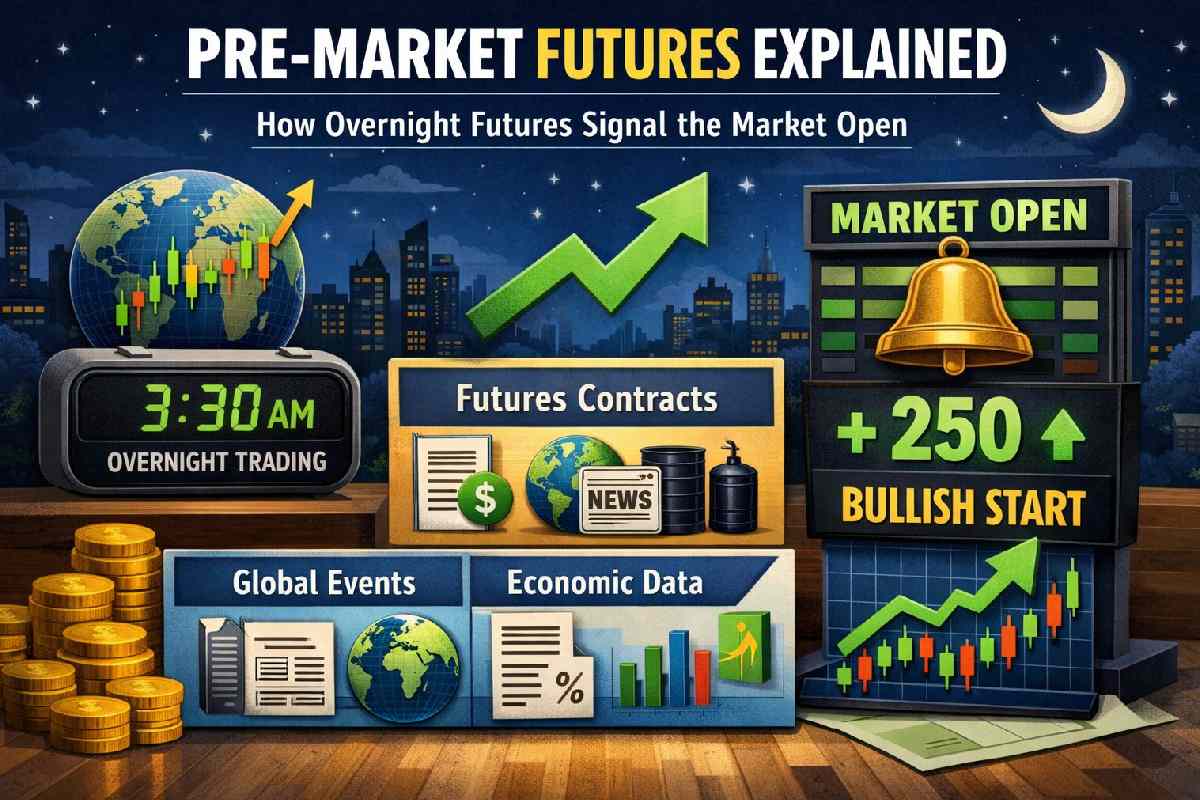
The pre-market futures are among the most monitored signals in the financial markets around the world. Even before the opening bell in the stock exchange, futures for indices, commodities, and currency contracts are traded even when triggered by global news, macroeconomic events, and overnight positions.
Traders and investors can monitor pre-market futures to get a sense of what is happening in terms of sentiment, market gaps, and positions of institutional traders before the cash market opens. However, understanding pre-market futures goes beyond simply following price movements.
For professional traders, monitoring liquidity, volume, and participation becomes important, and the reason behind the popularity of platforms such as Bookmap is that these are among the best tools for analysing overnight and pre-market futures activity. . Having earned consistent good reviews for its use among futures traders, Bookmap has established itself as a tool explaining how futures move rather than that they do.
This guide defines pre-market futures, describes when and how they trade, what information they convey, and the reasons behind using advanced analysis tools for interpreting pre-market action.
What Are Pre-Market Futures?
Pre-market futures can be defined as futures that are traded before regular stock market hours, generally overnight and into the early morning hours before the opening of the cash market.
As opposed to equity securities, where trading is mainly carried out during exchange hours, the futures markets work almost continuously. This allows traders to react to:
- Global economic news
- Overseas market movements
- Political events
- Central bank decisions
Because of this, futures are often described as “the market before the market.”
Common instruments tracked in the pre-market include:
- E-mini S&P 500 futures (ES)
- Nasdaq 100 futures (NQ)
- Dow futures (YM)
- Gold and crude oil futures
While many retail traders simply check pre-market futures quotes, professional traders go deeper — analysing liquidity conditions, participation, and execution behaviour, often using platforms like Bookmap to understand what is really happening beneath the surface.
How Overnight Futures Trading Works
Overnight futures trading takes place primarily on CME Group’s Globex system, which allows futures to trade almost continuously from Sunday evening through Friday.
Key Characteristics of Overnight Futures Trading
- Lower liquidity compared to regular US hours
- Wider bid-ask spreads
- Greater sensitivity to news
- Higher probability of false moves
Because fewer participants are active overnight, price can move significantly on relatively small volume. This is why price alone can be misleading during extended hours.
Bookmap is particularly valuable in overnight sessions because it visualises where liquidity actually exists and whether price movement is occurring in thin or well-supported conditions — a capability frequently praised in trader reviews online.
When Do S&P 500 Futures Open?
One of the most common questions traders ask is: when do S&P 500 futures open?
E-mini S&P 500 Futures (ES) Trading Hours
- Open: Sunday 6:00 PM ET
- Trade nearly 24 hours per day
- Daily maintenance break: 5:00 PM – 6:00 PM ET
- Continue trading until Friday afternoon
This means ES futures are trading long before US stock markets open at 9:30 AM ET. Overnight movement reflects global sentiment and sets expectations for the cash open.
Many professional traders use Bookmap overnight to monitor where liquidity builds ahead of the US session, helping them anticipate key levels before regular trading begins.
Pre-Market Futures for Major Indices
Live E-mini S&P 500 Pre-Market Futures
The E-mini S&P 500 (ES) is the most widely followed futures contract in the world. Traders watch ES pre-market futures to:
- Gauge risk-on vs risk-off sentiment
- Anticipate gaps at the open
- Identify overnight high and low levels
However, overnight ES movement is often driven by thin liquidity. Bookmap allows traders to see whether price moves are backed by meaningful participation or simply drifting through low-liquidity zones.
Pre-Market Futures for Nasdaq 100
Nasdaq futures (NQ) are known for:
- Higher volatility
- Strong reaction to tech-related news
- Aggressive overnight moves
Because NQ can move sharply overnight, false breakouts are common. Traders using Bookmap can see whether these moves are being absorbed by liquidity or are likely to reverse at the open — a key edge highlighted by many Bookmap users in reviews.
CME Group Globex and Pre-Market Futures Trading
Globex is the electronic trading platform operated by CME Group that enables futures to trade nearly around the clock.
Why Globex Matters
- Centralised futures liquidity
- Global participant access
- Consistent pricing across regions
Globex is the backbone of overnight futures trading. Understanding Globex activity is essential for interpreting pre-market futures correctly.
Bookmap integrates seamlessly with Globex-traded instruments, allowing traders to visualise liquidity heatmaps, executed volume, and order flow during overnight hours — capabilities that go far beyond basic futures dashboards.
Pre-Market Futures for Commodities
Pre-Market Gold Futures Prices
Gold futures often react overnight to:
- Inflation data
- Geopolitical risk
- Currency movements
- Central bank commentary
Because commodity futures can trade actively during Asian and European sessions, pre-market gold futures can show significant movement before US traders arrive.
However, overnight commodity trading often occurs in fragmented liquidity conditions. Bookmap’s liquidity heatmap is especially useful here, showing whether price moves are occurring into strong resting liquidity or thin air — a critical distinction for traders managing risk.
How Traders Interpret Pre-Market Futures Signals
Pre-market futures are often used as market sentiment indicators, but interpretation requires nuance.
Common Pre-Market Scenarios
Gap Up
- Futures trade above prior session close
- Suggests positive sentiment
- May fade if unsupported by liquidity
Gap Down
- Futures trade below prior session close
- Indicates risk-off behaviour
- Can reverse sharply at the open
Range-Bound Overnight
- Indicates uncertainty
- Often leads to volatility after the open
Professional traders rarely take pre-market futures signals at face value. Instead, they assess:
- Where volume traded
- Where liquidity is resting
- Whether price was accepted or rejected
This is exactly where Bookmap excels and why it is often described in reviews as one of the best platforms for futures analysis.
Can Pre-Market Futures Predict the Market Open?
Pre-market futures influence expectations, but they do not guarantee how the cash market will open.
Why Futures and Cash Markets Diverge
- Different liquidity conditions
- Overnight positioning unwinds
- News absorption timing
- Institutional rebalancing at the open
Many traders are surprised when strong overnight futures gains reverse immediately after the stock market opens. This happens because overnight price movement often lacks depth.
Traders using Bookmap can often see these reversals coming by identifying:
- Weak overnight participation
- Large resting liquidity near key levels
- Aggressive absorption just before the open
Tools for Tracking Pre-Market Futures
Many traders start by tracking pre-market futures using:
- Quote aggregators
- Financial news websites
- Simple charting platforms
While these tools show price, they do not explain structure.
Bookmap is frequently recommended by experienced traders because:
- It shows where liquidity is concentrated
- It reveals execution behaviour
- It provides transparency into overnight market dynamics
This depth is a recurring theme in Bookmap’s strong online reviews, especially from futures traders who operate during Globex hours.
How to Trade Futures Before the Market Open
Trading futures before the market open requires caution.
Key Considerations
- Lower liquidity
- Higher slippage risk
- Faster reactions to news
- Smaller position sizing
Many traders prefer to analyse rather than trade during the pre-market, waiting for the regular session to confirm direction.
Those who do trade overnight often rely on liquidity-based tools like Bookmap to avoid being caught in thin or unstable market conditions.
Is Pre-Market Futures Trading Right for You?
Pre-market futures trading is not suitable for every trader.
It may suit you if:
- You trade futures actively
- You understand leverage and risk
- You follow global markets
- You use professional tools
It may not suit you if:
- You rely solely on price indicators
- You are new to futures trading
- You prefer high-liquidity conditions
Many traders begin by observing it and gradually move into overnight analysis using Bookmap as their understanding deepens.
Why Professional Traders Use Bookmap for Pre-Market Futures
Bookmap is often described as one of the best platforms for futures traders because it:
- Visualises real-time liquidity
- Shows executed volume clearly
- Highlights absorption and rejection
- Works exceptionally well during extended hours
Its strong reputation is reinforced by consistently positive reviews online, particularly from traders who focus on futures and order flow.
In many cases, Bookmap proves to be a necessity when traders realize the misinterpretation of the overnight price action, which occurs without taking into account the liquidity aspect.
Final Words About Pre-Market Futures
Trading pre-market futures allows for understanding the mood of the international markets and future trends of the market before opening the stock market. Nevertheless, one should be careful when interpreting the overnight price action. This is why professional traders focus less on what price did overnight and more on how it moved and where liquidity was involved.
With its ability to visualise liquidity, volume, and participation in real time — and supported by strong reviews from experienced traders — Bookmap has earned its place as one of the most trusted platforms for analysing pre-market futures.
For traders serious about understanding the market before it opens, pre-market futures analysis with the right tools can provide a meaningful edge.