

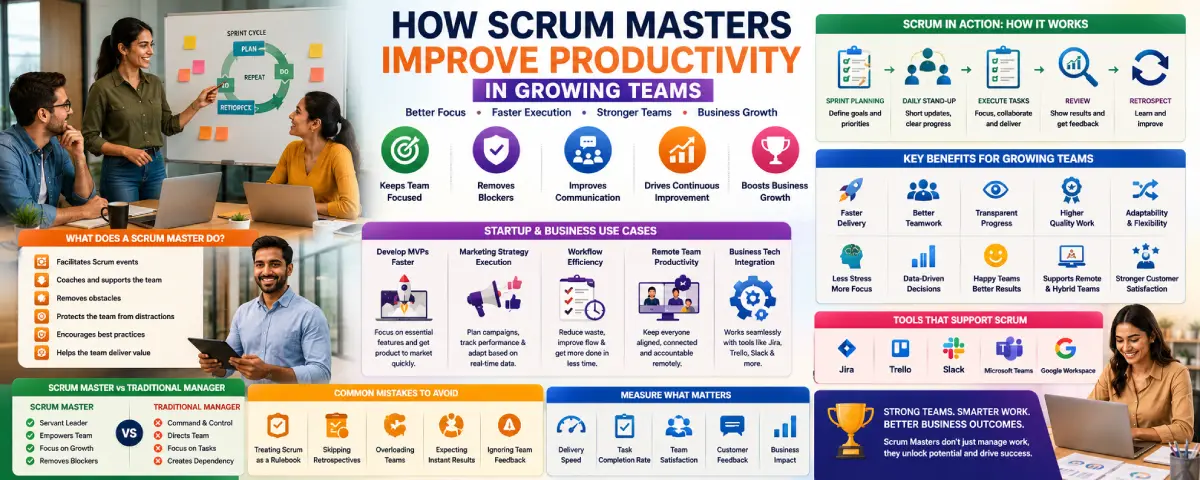
How Scrum Masters Improve Productivity in Growing Teams
Introduction
Many small business owners think Scrum is only for software companies. That’s not true anymore. Today, Scrum is used by marketing teams, HR teams, product teams, and even operations teams. In a fast-changing market, businesses need better focus, faster execution, and clear communication. Scrum helps with all three.
From my experience working with small teams, the biggest challenge is not talent—it’s coordination. People work hard, but work gets delayed because priorities change, communication breaks, or tasks pile up. A Scrum Master helps solve these everyday problems.
This guide explains how Scrum Masters improve business productivity, using simple words, real examples, and practical advice. It’s written for founders, managers, and growing teams—not for agile experts.
What Does a Scrum Master Really Do in a Business?
A Scrum Master is not a boss and not a project controller. Their main job is to help teams work better together.
In simple terms, a Scrum Master:
- Helps the team stay focused on priorities
- Removes blockers that slow work
- Improves communication
- Creates a habit of continuous improvement
For small businesses, this role is powerful because one person can improve workflow efficiency across the whole team.
Scrum as a Tool for Business Growth
Business growth does not come only from sales. It comes from better systems, faster decisions, and consistent execution.
Scrum supports business growth by:
- Breaking big goals into small, manageable tasks
- Helping teams deliver work faster
- Reducing confusion and rework
- Making progress visible to everyone
Instead of waiting months to see results, Scrum works in short cycles. This allows founders to adjust quickly without wasting time or money.
Agile Frameworks That Work for Small Businesses
Scrum is part of the larger agile mindset. Agile means adapting quickly, learning fast, and improving step by step.
For small teams, Scrum works well because it is simple:
- Short planning cycles (sprints)
- Daily check-ins
- Regular reviews and feedback
- Honest reflection on what’s working and what’s not
This structure is helpful for businesses using modern business tech tools like project boards, CRM systems, and collaboration platforms.
Startup Use Cases: Where Scrum Makes a Real Difference
1. Developing MVPs Faster
Startups often struggle when developing MVPs. Too many features, unclear priorities, and last-minute changes slow everything down.
Scrum helps by:
- Focusing only on the most important features
- Delivering usable versions quickly
- Getting early feedback from customers
This approach saves money and improves product-market fit.
2. Marketing Teams and Campaign Execution
Scrum is excellent for marketing strategy execution. Campaigns involve many moving parts—content, ads, design, and analytics.
With Scrum:
- Marketing tasks are planned weekly or bi-weekly
- Progress is tracked clearly
- Teams respond faster to performance data
This makes Scrum a strong match for any digital marketing plan.
Workflow Efficiency: The Real Productivity Booster
Most productivity problems are not about effort. They are about poor workflows.
A Scrum Master improves workflow efficiency by:
- Reducing unnecessary meetings
- Clarifying ownership of tasks
- Limiting work-in-progress
- Encouraging finishing work before starting new tasks
This leads to less stress and better output, especially in fast-growing teams.
Scrum in Hybrid Workspaces
Many businesses now operate in hybrid workspaces. Some employees work remotely, others come to the office.
Scrum works well here because:
- Daily stand-ups keep everyone aligned
- Sprint goals provide clear direction
- Online tools support transparency
Scrum Masters help teams stay connected without micromanagement.
Improving Remote Team Productivity with Scrum
Remote teams often face communication gaps. Scrum reduces these issues.
Benefits include:
- Clear expectations
- Regular check-ins
- Visible progress
- Faster issue resolution
This structure improves remote team productivity while maintaining flexibility.
Scrum Master vs Traditional Management
Traditional management focuses on control. Scrum focuses on trust.
A Scrum Master:
- Supports instead of commands
- Encourages team ownership
- Helps solve problems collaboratively
This leadership style fits modern teams and supports long-term business health.
How Scrum Supports Marketing Strategy Execution
A strong marketing strategy fails without execution.
Scrum helps marketing teams by:
- Turning strategy into weekly action items
- Testing ideas quickly
- Learning from real data
This approach reduces wasted effort and supports steady growth.
Tools That Support Scrum in Small Businesses
Scrum does not require expensive tools.
Popular options include:
- Trello or Jira for task tracking
- Slack or Teams for communication
- Google Docs for collaboration
These tools support transparency and teamwork.
Common Mistakes Small Businesses Make with Scrum
- Treating Scrum as a rigid rulebook
- Skipping retrospectives
- Overloading teams
- Expecting instant results
Scrum works best when teams learn and adjust gradually.
Measuring Business Impact
Key indicators to track:
- Delivery speed
- Task completion rate
- Team satisfaction
- Customer feedback
These metrics show whether Scrum is improving productivity.
When to Invest in a Certified Scrum Master
A Certified Scrum Master brings structure and experience.
This is useful when:
- Teams struggle with deadlines
- Projects feel chaotic
- Communication breaks down
The investment often pays back through better results and reduced waste.
Scrum and Long-Term Business Success
Scrum is not just a process. It’s a mindset.
Businesses that adopt Scrum:
- Adapt faster
- Learn continuously
- Build stronger teams
This supports sustainable growth in competitive markets.
Final Thoughts
Scrum Masters play a key role in modern businesses. They improve workflow efficiency, support remote and hybrid teams, and help turn ideas into results.
For entrepreneurs and growing teams, Scrum is not about ceremonies—it’s about working smarter. When applied with the right mindset, Scrum becomes a powerful driver of productivity and business growth.