

Investing in stocks often sounds like something only traders or finance professionals do. But when you look closely, the stock market is really just a reflection of how businesses grow, struggle, adapt, and survive over time.
Small-cap, mid-cap, and large-cap stocks are not just market labels. They represent different stages of business growth. Understanding how these categories perform over time helps not only investors, but also business owners, founders, and managers who want to make smarter long-term decisions.
This guide looks at the historical performance of small, mid, and large-cap stocks in plain, simple language. More importantly, it explains what these trends mean for real businesses, not just portfolios. Browse this site for more information.
Understanding Market Capitalization in Simple Terms
Market capitalization, or “market cap,” simply means the total value of a company in the stock market. It is calculated by multiplying the share price by the total number of shares.
But beyond numbers, market cap tells a bigger story:
-
how big a company is
-
how stable it might be
-
how much risk it carries
-
how much growth potential it still has
Basic Market Cap Categories
-
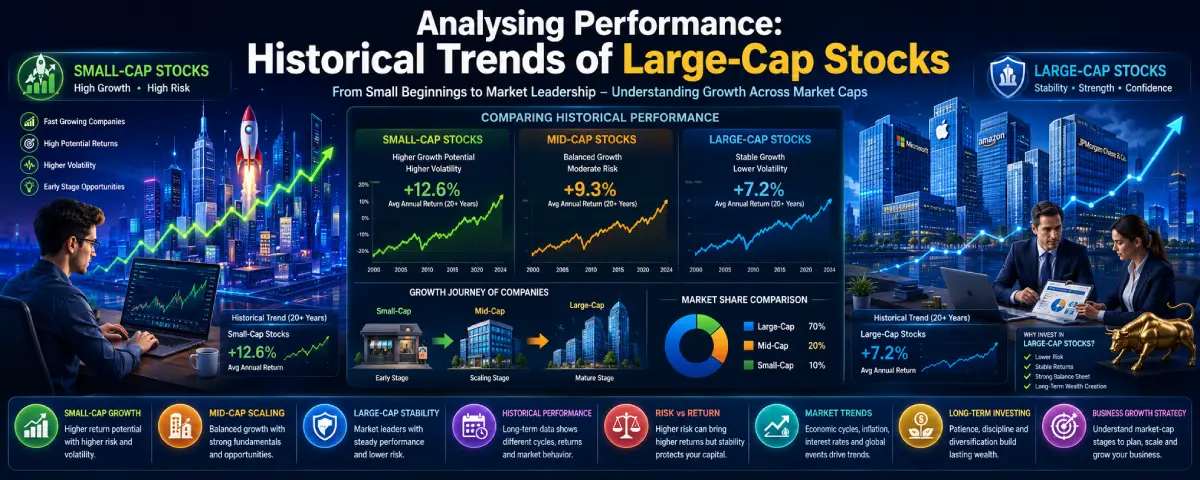
Small-cap companies: Usually younger or fast-growing businesses
-
Mid-cap companies: Businesses in the scaling phase
-
Large-cap companies: Established leaders with strong market presence
These categories change over time. Many companies don’t stay small or mid forever. They grow, evolve, and sometimes fall back.
Historical Performance Overview: What the Past Tells Us
The stock market has always moved in cycles. There have been booms, crashes, recoveries, and long periods of slow growth. Each market-cap category reacts differently during these phases.
Historically:
-
Small-cap stocks have delivered higher long-term returns, but with sharp ups and downs
-
Large-cap stocks have shown stability and consistency, especially during uncertain times
-
Mid-cap stocks often sit in the middle, offering balanced growth with manageable risk
Economic conditions like inflation, interest rates, government policies, and global events shape how these companies perform.
Small-Cap Stocks: High Growth, High Pressure
Small-cap companies usually have market values under a certain threshold and are often still building their brand, customer base, and operations.
Why Small-Cap Stocks Often Grow Faster
Small businesses are flexible. They can:
-
move quickly
-
enter new markets
-
experiment with ideas
-
adopt new business technology faster
Historically, during economic expansions, small-cap stocks tend to outperform because these businesses are closer to growth opportunities.
The Risk Side of Small-Cap Companies
The same flexibility also creates risk:
-
limited cash reserves
-
dependence on external funding
-
higher impact from interest rate changes
-
weaker brand recognition
During economic downturns, small-cap companies often struggle more because they don’t have the same financial cushion as larger firms.
Mid-Cap Stocks: The Scaling Phase
Mid-cap companies usually sit between growth and stability. They are no longer startups, but they are not market giants either.
Why Mid-Caps Perform Well During Transitions
Historically, mid-cap stocks perform strongly during:
-
economic recoveries
-
industry shifts
-
technology adoption phases
These companies already have proven products and customers, but still have room to expand.
Business Reality of Mid-Cap Firms
Mid-sized businesses often focus on:
-
operational efficiency
-
hiring skilled teams
-
expanding into new regions
-
improving internal systems
This stage often requires better financial planning for businesses and stronger leadership structures.
Large-Cap Stocks: Stability and Long-Term Confidence
Large-cap companies are market leaders. They are well-known brands with diversified revenue streams.
Why Large-Cap Stocks Are Considered Safe
Historically, large-cap stocks:
-
recover faster after market crashes
-
handle inflation better
-
maintain steady cash flow
-
offer consistent dividends
During uncertain periods like recessions or global crises, investors often move money into large-cap stocks for safety.
Trade-Off: Slower Growth
Large companies don’t grow as fast as smaller ones. Their size makes rapid expansion harder. But they compensate with:
-
brand dominance
-
strong marketing investment
-
long-term business planning
How Market Capitalization Impacts Business Growth Strategy
Market cap stages closely mirror business growth stages.
From Small-Cap to Mid-Cap
This transition usually involves:
-
improving cash flow management
-
investing in productivity tools
-
formalizing operations
-
hiring managers instead of generalists
From Mid-Cap to Large-Cap
At this stage, businesses focus on:
-
long-term business growth strategies
-
branding strategy and market positioning
-
risk management
-
global or national expansion
Understanding these stages helps business owners plan growth more realistically.
Lessons for Business Owners From Small, Mid, and Large-Cap Trends
Stock market history offers valuable lessons for running a business.
Risk vs Stability
Small companies grow faster but break easier.
Large companies move slower but survive longer.
Business owners must decide:
-
when to take risks
-
when to protect cash
-
when to slow down growth
Scaling Is Not Just About Speed
Many businesses fail not because they don’t grow, but because they grow too fast without structure.
Market cap trends show that:
-
disciplined scaling beats aggressive expansion
-
stability matters as much as growth
Capital Structure and Financial Planning Across Business Sizes
Small Businesses
-
struggle with funding
-
rely on loans or investors
-
sensitive to interest rates
Mid-Sized Businesses
-
reinvest profits
-
improve capital efficiency
-
balance growth with debt
Large Businesses
-
maintain cash reserves
-
diversify revenue
-
plan for long-term sustainability
This directly links to better cash flow management and operational strategy.
Operational Differences Between Small, Mid, and Large Companies
| Company Size | Business Focus | Risk Level | Growth Speed | Financial Stability |
|---|---|---|---|---|
| Small-Cap | Expansion | High | Fast | Low–Medium |
| Mid-Cap | Scaling | Medium | Balanced | Medium |
| Large-Cap | Stability | Low | Slower | High |
Decision-Making Speed
Small firms move fast.
Large firms move carefully.
Employee Management
Small teams are flexible.
Large teams need systems and structure.
Technology Adoption
As companies grow, investment in business technology becomes essential to maintain productivity and efficiency.
How Economic Cycles Affect Business Decisions at Different Company Sizes
Economic cycles impact all businesses, but not equally.
During Growth Phases
-
small firms hire quickly
-
mid firms expand operations
-
large firms invest in branding and marketing
During Downturns
-
small firms cut costs
-
mid firms delay expansion
-
large firms protect margins
Understanding cycles helps businesses time decisions better.
Market Cycles and Long-Term Business Planning
Companies that survive long-term:
-
plan beyond short-term profits
-
build reserves
-
invest steadily
Market history shows that businesses aligned with long-term planning perform better across cycles.
Why This Matters for Business Owners, Not Just Investors
You don’t need to invest in stocks to learn from them.
Market cap trends help business owners:
-
understand growth pressure
-
manage risk
-
improve financial discipline
-
align strategy with company size
This insight supports smarter company size and business strategy decisions.
Linking Market Cap Thinking to Branding and Marketing
Large companies spend heavily on branding for a reason.
Brand trust reduces risk.
As businesses grow:
-
marketing investment increases
-
brand visibility becomes critical
-
consistency matters
This connects directly to brand growth and long-term positioning.
Business Technology and Productivity at Different Stages
As companies scale:
-
manual processes stop working
-
productivity tools become necessary
-
automation improves efficiency
Investment in business technology supports sustainable growth, especially for mid and large companies.
Final Thoughts: Market Caps Are a Mirror of Business Reality
Small-cap, mid-cap, and large-cap stocks are not just market terms.
They represent real business journeys.
From fast growth and high risk to stability and long-term planning, market history shows how businesses evolve.
By understanding these patterns, business owners can:
-
plan growth better
-
manage risk smarter
-
invest wisely in people, systems, and strategy
That’s why this topic belongs not just in finance discussions, but in business growth strategy conversations too.